Healthcare services / SMB
Measured impactMy new website looks great — why is nobody finding us on Google?
New clinic, 3 weeks live — 12 GSC impressions, 0 patients from Google
Oura Starter Read →
A fast-growing restaurant chain with chaotic GBP — inconsistent NAP, review concentration. Oura Growth unified the local map per branch.
The buying question this story answers We have 5 branches — why does Google Maps only know one, and the rest stay empty?
The gist
Multi-location is not copy-paste flagship. Each branch needs its own digital identity — or Maps acts like the other four don't exist.
F&B / Multi-location
Anonymized client
“Flagship is packed. New branches are quiet. On Maps people say 'permanently closed' — we're open. I explain it in DMs every day.”
Full story
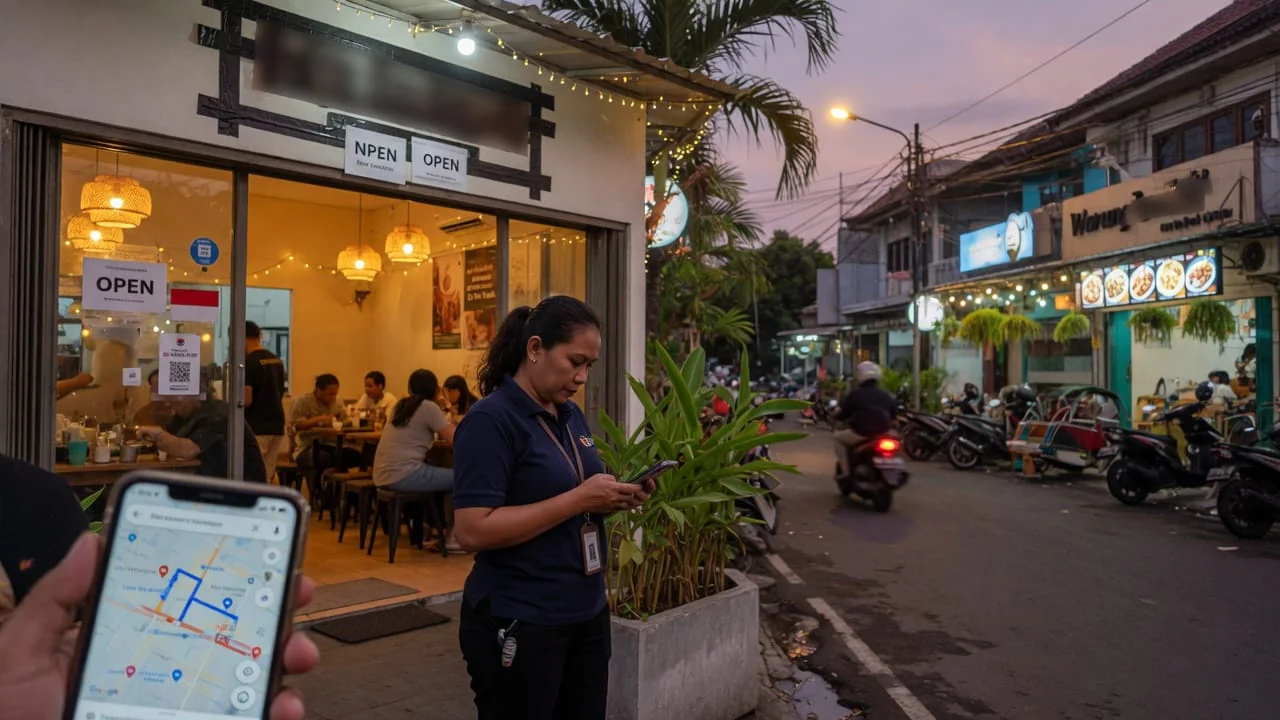
Branch B’s store manager sent a photo to the ops group: a guest hesitated at the door because Google Maps showed “Permanently closed”. Door open. Kitchen running. Yesterday’s occupancy: 42%.
The operations manager — who usually handles supply chain, shift schedules, and QC — spent 3 hours a week answering DMs: “We’re open, yes.”
Not a food quality problem. A digital map that had five branches on paper but only one Google trusted.
Expansion from 1 to 5 branches in 18 months. In the field: same SOP, same suppliers, same training. Digital? Chaos. Each branch had a local social admin with different address formats. New GBP cloned from flagship — some suspended by Google. Review QR only at flagship register — 340 reviews there, 12 at branch B.
Website? One “Our Locations” page with an embedded map. No page answering: branch C hours, branch D parking, branch E menu differences.
Local social agencies — inconsistent NAP. GBP clone — suspension. Instagram promos to all followers — guests still went to flagship because Maps directed there. Website redesign — still one locations page.
Franchise mindset without franchise digital playbook.
2 GBP incorrectly closed — from duplicate submissions and failed verification. Manual reclaim needed.
No per-branch pages — query “[brand] [city name]” had no matching URL; Google defaulted to flagship.
Review concentration — Maps algorithms treat branches without reviews as irrelevant. Negative cycle.
AI geo resolution failed — “nearest branch” questions need Organization → LocalBusiness × 5 entity tree. Missing.
Ops decision: pause branch 6 expansion until existing 5 had correct digital identity. Owner initially objected — “we can market while opening.” Data won: new branch occupancy in areas with wrong Maps status = wasted rent.
Typical patterns for multi-location F&B. Growth engagement patterns:
Branch 6 uses the same playbook — not another flagship clone.
Before Oura
Turning point
Before & after
Measured metrics
wrong GBP status
Relative scale for comparison — not absolute units.
The challenge
5-branch restaurant chain in greater metro area, expanded from 1 to 5 in 18 months. Flagship busy; branches B–E at 40–55% occupancy. On Google Maps, 2 branches incorrectly marked permanently closed. Reviews concentrated at branch A (340 reviews, 4.2★); others 8–15 reviews. Website had one locations page — no per-branch landing for "brand + area" queries. Prospects asking AI "nearest [brand] branch in [city]" got ambiguous answers or flagship only.
The approach
NAP audit across 5 branches: GBP, website, Instagram, delivery platforms.
Fix wrong GBP status — reclaim, verify, standardize hours & categories.
Per-branch answer-first landing: address, hours, menu highlights, reservations, parking.
LocalBusiness schema per location + parent Organization — clear entity tree.
Equitable review strategy — QR per branch, response templates, no fake reviews.
Local OAVF: per-branch FAQ, AI-referral segment per location in GA4.
Execution phases
Month 1
Reclaim 2 wrongly closed branches, NAP audit at 5 points. No new pages yet — stabilize first.
Months 2–4
5 answer-first pages, LocalBusiness schema, internal links from homepage. Review strategy per store.
Months 5–6
Local FAQ, AI-referral per branch, iteration from GSC geo queries + GA4 footfall proxy.
Oura Atlas
Data from GSC & GA4 becomes a brief, execution runs through dry-run and backup, impact is measured — not wild production changes.
Relate?
“I run 5 stores, not 1. But on the internet we only have one address Google trusts.”
“Guests say Maps shows us closed. I send a photo of the open door every morning. Exhausting.”
Measured impact
wrong GBP status
non-flagship occupancy
local AI referral in GA4
Explore more
Healthcare services / SMB
Measured impactNew clinic, 3 weeks live — 12 GSC impressions, 0 patients from Google
Professional services / Local B2B
Measured impactServices agency: capable on page 2 — prospects already have a ChatGPT shortlist
First step · free
Start with a Free Mini Audit — we map your fastest path.
Win on Google. Get cited by AI.
Step 1 / 3
1. About you
SEO
3 priorities
GEO
citation gap
AEO
schema check
5-branch restaurant chain in greater metro area, expanded from 1 to 5 in 18 months. Flagship busy; branches B–E at 40–55% occupancy. On Google Maps, 2 branches incorrectly marked permanently closed. Reviews concentrated at branch A (340 reviews, 4.2★); others 8–15 reviews. Website had one locations page — no per-branch landing for "brand + area" queries. Prospects asking AI "nearest [brand] branch in [city]" got ambiguous answers or flagship only. This story shows how the Oura squad + Atlas handle similar profiles through the Oura Growth package.
This project ran on Oura Growth. Service scope was tailored to F&B / Multi-location — see the timeline and approach sections on this page for execution detail.
Multi-location is not copy-paste flagship. Each branch needs its own digital identity — or Maps acts like the other four don't exist. Figures on this page come from real client data with publication permission (Measured impact badge).
It depends on technical foundation and competition. Technical fixes and quick wins often show in 4–8 weeks; organic momentum and AI referral usually need several months of continuous iteration.
See the sidebar summary — each case study links to the Oura package that ran it. A Mini Audit helps map the realistic tier for your context.