 ChatGPT
  Gemini
  Perplexity
  Claude
  Copilot
 P1
Entity Foundation
Build a clear, consistent brand identity as an entity — schema, sameAs, and authority signals AI engines understand.
Signature · OAVF
Buyers now research in ChatGPT, Gemini, and Perplexity. OAVF makes sure your brand is the one cited and recommended — not your competitor.
+80–100%
GA4 AI referral
Growth & Domination client target · similar profile

More and more people get answers without ever clicking a website — straight from AI. If your brand is not structured to be cited by generative engines, you disappear from the very conversations that drive buying decisions. OAVF is built to close that gap.
Zero-click
Answers without clicks
Multi-surface
Google + chatbot
Entity
Brand must be clear
Engine guides
Each AI surface has a different retrieval bias. Use these spokes to adapt OAVF for Google AI Overview, Claude, Perplexity, and Gemini without overclaiming guaranteed visibility.
Search foundations, snippet controls, and answer-first pages for Indonesian AI search behavior.
Read guide -> ClaudeA precision-led guide for source-backed pages, crawler policy, and Claude citation testing.
Read guide -> PerplexityCrawler access, freshness, explicit sources, healthy UGC, and weekly citation tests.
Read guide -> GeminiGoogle ecosystem foundations, entity clarity, and prompt testing for Gemini answers.
Read guide ->Oura AI Visibility Framework
Not a separate SEO checklist — five interlocking pillars so your brand is worth citing by generative engines and measurable every month.
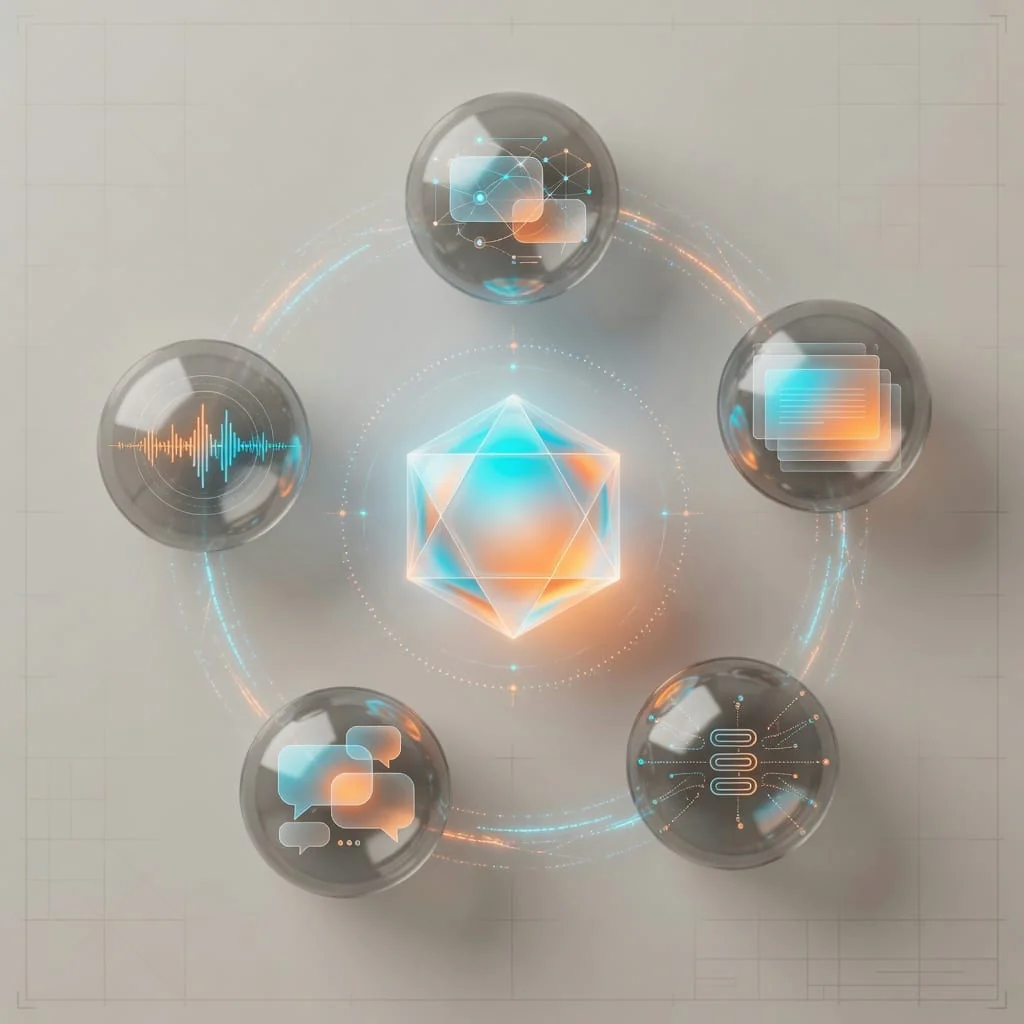
OAVF · 5 Pillars
Entity, content, citation, intent, and measurement — unified into one measurable AI visibility system, not a scattered checklist.
Build a clear, consistent brand identity as an entity — schema, sameAs, and authority signals AI engines understand.
Structure answer-first content with headings and data that are easy for generative models to extract and cite.
Strengthen off-site citation signals (mentions, research, PR) so AI considers your brand a source worth referencing.
Map the real questions people ask AI, then answer them precisely on the right pages.
Track AI-referral in GA4 and citations across ChatGPT/Gemini/Perplexity/Claude, then iterate on the data.
Measurement
Atlas tracks AI-referral directly in GA4 and monitors citations across generative engines. That means you don't guess — you see the data: where AI traffic comes from, what query triggered it, and how the trend moves each month.
Traffic from chatgpt.com, perplexity.ai, gemini, and claude.ai is separated — not buried in organic.
Monthly checks: whether your brand is mentioned in ChatGPT, Perplexity, Gemini, and Claude answers for priority queries.
Atlas combines GSC, GA4, and AI citation signals into one iteration report — not separate spreadsheets.
Before & after
An online store profile with traffic flat for 6 months — after bottlenecks were fixed and OAVF ran, the brand started appearing as a cited source in AI answers.
Similar profile · full detail in case study
Before OAVF
After OAVF + Growth
+25%/mo
organic growth
62 → 92
mobile PageSpeed
+80%
GA4 AI referral
0
production incidents
Packages with OAVF
Starter builds the entity foundation. Content focuses on the content engine. Growth and Domination run full OAVF — with monthly AI-referral measurement.
First step · free
Start with a Free Mini Audit — we map your AI-visibility position today.
Win on Google. Get cited by AI.
Step 1 / 3
1. About you
SEO
3 priorities
GEO
citation gap
AEO
schema check
AEO (Answer Engine Optimization) structures content to be extracted as a direct answer — featured snippets, People Also Ask, Google AI Overviews. GEO (Generative Engine Optimization) gets your brand recommended by ChatGPT, Gemini, Perplexity, and Claude. Both complement each other and run together through OAVF.
No — GEO builds on a healthy SEO foundation. Without technical SEO, entity clarity, and extractable content, AI engines have no trustworthy source to cite. At Oura Works, SEO + AEO + GEO is one measured program, not three separate projects.
Two layers: an AI-referral segment in GA4 (traffic from chatgpt.com, perplexity.ai, gemini, claude.ai — separate from organic) plus monthly manual citation checks across generative engines. Atlas combines GSC, GA4, and citation signals into one iteration report.
Initial citations can appear within weeks for strong-signal topics with clear entity. Consistent visibility usually forms over 4–8 months — depending on category competition, domain authority, and OAVF completeness. We set realistic expectations in the Mini Audit.
OAVF (Oura AI Visibility Framework) is our five-pillar methodology: entity, answer-first content, citation signal, query mapping, and measurement. Starter & Content build the foundation; Growth & Domination run full OAVF with a senior squad + Atlas full loop.
No. OAVF applies to any stack — WordPress, Astro, headless, hybrid. The requirement: fast pages, crawlability, and structured content (headings, FAQ schema, extractable definitions) readable by Google and generative engines.
AI Visibility makes your brand recommendable by ChatGPT, Gemini, Perplexity, Claude, and Copilot — not just indexed on Google. Ahrefs (Brand Visibility, 75K brands) reports the strongest AI visibility correlation with brand web mentions (**0.664**) — stronger than backlinks alone.
Princeton GEO research (KDD 2024, arXiv 2311.09735) found adding **sourced statistics** to weak content can lift generative visibility by up to **+41%** in experimental settings — not a ranking guarantee, but proof that content format affects AI retrieval.
Oura Works uses OAVF (Oura AI Visibility Framework): five pillars — entity clarity, extractable content, citation signals, conversational query mapping, and a measurement loop — tracked via GSC, GA4 AI-referral segments, and monthly citation checks.
GEO (Generative Engine Optimization) complements SEO. Ahrefs (2025, 1.9M AI Overview citations) reports **76.1%** of cited URLs already rank in Google's top 10 — SEO remains the discoverability prerequisite.
Without technical foundation and fast pages, content will not be selected. Without answer-first sections, engines struggle to cite. Without clear entity (Organization, Service, FAQ schema), your brand blends with competitors.
As we often hear from B2B clients: *"We're on page one, but ChatGPT never mentions our name."* That is a citation-worthiness gap — different from a classic ranking gap.
We measure AI-referral in GA4, watch queries that trigger citations, and iterate pillar content, FAQs, and case studies so engines have fresh, authoritative material.
In Oura case studies, similar profiles often show GA4 AI-referral rising **+35% to +95%** after technical foundation and OAVF run for 4–8 months — figures vary by industry and baseline.
Discovered Labs (2025) on ChatGPT/Claude/Perplexity citation patterns emphasizes engines more often cite passages with **one-sentence definitions**, **structured FAQs**, and **explicit sources** — not long promotional paragraphs.
Princeton GEO also found **quotation** (expert quotes) and **citation** (source references) as the next-strongest techniques after statistics — which is why Oura service pages always include answer-first blocks, FAQ schema, and sourced facts.
OAVF applies to WordPress, Astro, headless, or hybrid — requirements: crawlability, healthy CWV, llms.txt and structured data. Oura maps entity, rewrites service pages, adds extractable chunks, and monitors results per industry.
Example queries we test monthly: *"best SEO agency Jakarta"*, *"manufacturing ERP Indonesia"*, *"SME tax consultant"* — then log citation rate per engine (ChatGPT, Perplexity, Gemini, Claude).
Read legal, SaaS, property, and logistics case studies on ouraworks.com. Request a [Mini Audit](/mini-audit/) for your first GEO assessment — including a public anonymized sample PDF.