
Healthcare services / SMB
Measured impactMy new website looks great — why is nobody finding us on Google?
New clinic, 3 weeks live — 12 GSC impressions, 0 patients from Google
Oura Starter Read →
E-commerce SEO case study: an online store with stagnant organic traffic. Audit found zombie pages & cannibalization — Oura Growth restarted measurable momentum.
The buying question this story answers My catalog is complete and ads are running — why is organic traffic not moving at all?
The gist
Stagnant organic almost always has a findable bottleneck — after that, Google momentum and AI-referral can be restarted with measured iteration, not random content.
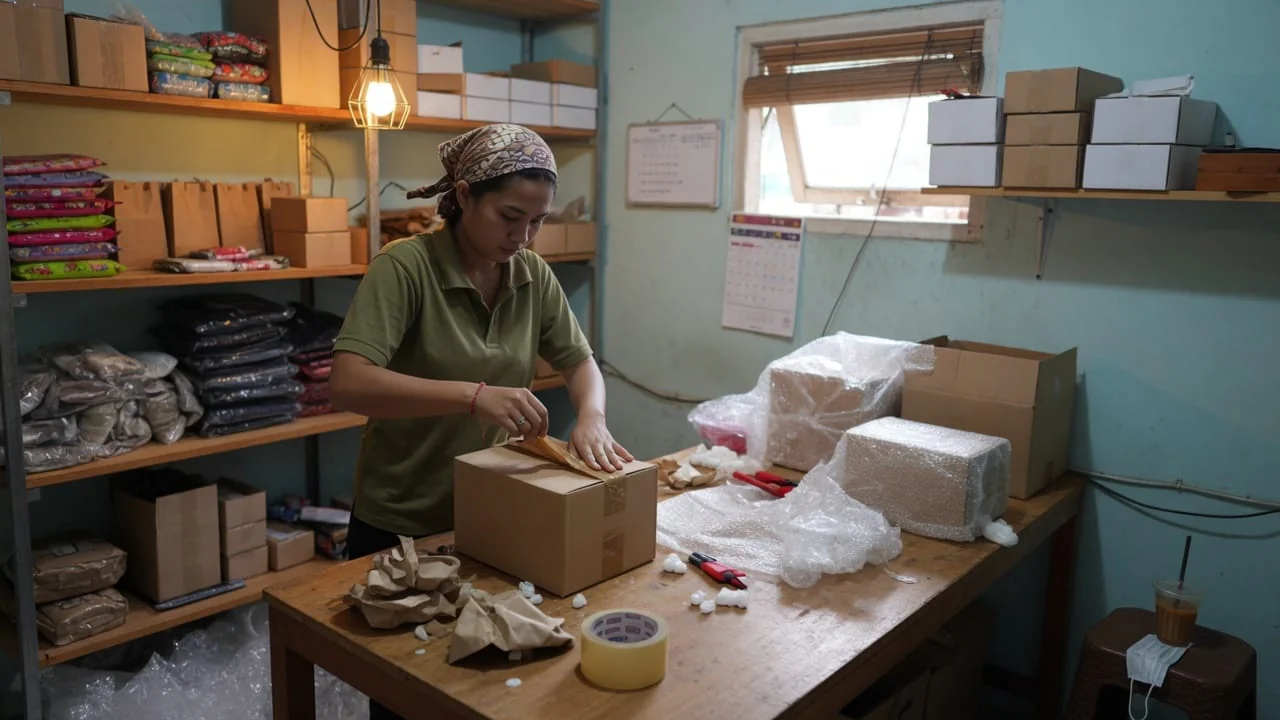
E-commerce / Retail
Anonymized client
“Ads still running, catalog complete — but organic flat since March. The team is tired of guessing.”
Full story
The head of e-commerce opened GA4 on the projector. Organic traffic chart from March to August: nearly a flat line. Next slide: Google Ads spend up 22% this quarter. ROAS? Slightly down.
“We have 1,200 SKUs. Ads are running. Content team published 8 blog posts last month. Why is organic not moving?”
That question had been asked in three consecutive meetings. Answers were always the same: try more content, raise budget, wait for season. Nobody had concrete data.
Buyers in this category research on Google (specs, comparisons, reviews) and increasingly in AI answers (“compare running shoe A vs B for marathon”). This store had full product range and active ads — but organic visibility was stagnant on both fields.
Internal team prompt: “Best online store for [category] in Indonesia”. Competitors with tidy comparison pages and structured FAQ? Named. This brand? Never.
Ad budgets raised each quarter — paid traffic up, organic flat. New SKUs added 40/month with no category strategy. Freelancers wrote generic blog posts not linked to converting product pages. Popular SEO plugin installed — green dashboard, traffic unmoved.
The problem was not lack of products or ads. The problem was hundreds of pages blocking the important ones, and nobody measuring whether AI was already sending traffic.
Once we audited, the numbers were clear:
847 indexed pages — 312 zombies. Under 100 words, zero clicks in 90 days. Search engines spent crawl budget on pages that never brought buyers.
Cannibalization. Three URL pairs fighting the same query — “men’s running shoes” vs “running shoes men” vs duplicate category filters. Google could not pick a winner; all ranked mediocre.
LCP 4.2s on best-sellers. PageSpeed score 62 — not red, but slow enough to lower crawl priority on the pages that mattered most.
GA4 did not separate AI-referral. Traffic from perplexity.ai mixed with direct. Team had no idea if the new field was already signaling.
The controversial decision: archive 280+ zombie pages first, do not produce new content. Marketing initially pushed back — “those are already indexed.” Data won: dead pages were blocking pages with conversion potential.
Growth at Oura starts with diagnosis, not volume:
Patterns we see in similar Growth engagements:
Once momentum returns, next iteration focuses on highest-margin product clusters — not chasing every keyword at once.
Before Oura
Turning point
Before & after
Measured metrics
mobile PageSpeed
Relative scale for comparison — not absolute units.
The challenge
Organic traffic flat for nearly 6 months despite 1,200+ SKU catalog and running Google/Meta ads. Mobile PageSpeed yellow (score 62), hundreds of thin category pages, and cannibalization across similar product URLs. Internal team tried adding blog content and raising ad budgets — organic stayed flat. When buyers asked ChatGPT to compare products in this category, this store was never mentioned.
The approach
Bottleneck audit: CWV on conversion pages, cannibalization, zombie pages, category structure.
Archive 280+ zombie pages, merge cannibal pairs, fix LCP on 12 priority product pages.
Restructure internal linking: category hubs → conversion products → supporting answer-first content.
Answer-first content for real buyer questions: specs, comparisons, shipping, warranty.
OAVF: product entity, FAQ schema, AI-referral segment in GA4 — organic vs AI separate.
Monthly Atlas loop: data → brief → dry-run → per-cluster impact verification.
Execution phases
Month 1
Full technical audit: CWV, cannibalization, zombie pages. Archive dead pages and merge conflicting URLs — without waiting for new content.
Months 2–3
LCP fixes on best-sellers, internal link rebuild to category hubs. Answer-first content for 8 priority buyer question clusters.
Months 4–6
Product entity, FAQ schema, AI citation monitoring. Monthly Atlas iteration — every sprint backed by GSC and GA4 data.
Oura Atlas
Data from GSC & GA4 becomes a brief, execution runs through dry-run and backup, impact is measured — not wild production changes.
Relate?
“We spent time guessing what articles to write. After the audit, we learned 300 of our pages were actually blocking the important ones.”
“Monthly reports now separate organic and AI-referral. We can see which channel is actually moving — not gut feeling.”
Measured impact
organic growth
mobile PageSpeed
AI referral in GA4
Explore more
Healthcare services / SMB
Measured impactNew clinic, 3 weeks live — 12 GSC impressions, 0 patients from Google
Professional services / Local B2B
Measured impactServices agency: capable on page 2 — prospects already have a ChatGPT shortlist
First step · free
Start with a Free Mini Audit — we map your fastest path.
Win on Google. Get cited by AI.
Step 1 / 3
1. About you
SEO
3 priorities
GEO
citation gap
AEO
schema check
Organic traffic flat for nearly 6 months despite 1,200+ SKU catalog and running Google/Meta ads. Mobile PageSpeed yellow (score 62), hundreds of thin category pages, and cannibalization across similar product URLs. Internal team tried adding blog content and raising ad budgets — organic stayed flat. When buyers asked ChatGPT to compare products in this category, this store was never mentioned. This story shows how the Oura squad + Atlas handle similar profiles through the Oura Growth package.
This project ran on Oura Growth. Service scope was tailored to E-commerce / Retail — see the timeline and approach sections on this page for execution detail.
Stagnant organic almost always has a findable bottleneck — after that, Google momentum and AI-referral can be restarted with measured iteration, not random content. Figures on this page come from real client data with publication permission (Measured impact badge).
It depends on technical foundation and competition. Technical fixes and quick wins often show in 4–8 weeks; organic momentum and AI referral usually need several months of continuous iteration.
See the sidebar summary — each case study links to the Oura package that ran it. A Mini Audit helps map the realistic tier for your context.