












CHAPTER 01 / BEFORE YOU BEGIN
Prepare your materials. Define the deliverables.
Business owners, copywriters, marketers, and designers who prepare offer pages.
Starting materials
- Offerings and scope of services
- Customer questions about costs and processes
- Evidence that may be published
What you will prepare
Outline of service pages and list of claims ready for review.
Use it as material for decisions and discussions, then adjust the work limits to your conditions.
Starting from one page, one process, or one most important need. Note unknowns as questions; Don't force answers just to make the worksheet look finished.
CHAPTER 02 / WORK STEPS
Work in a clear order.
Determine who is served and the problem
Choose a group of buyers and fairly specific needs. Write a lead sentence that explains the service, its plausible benefits, and its context. Don't start with internal jargon. If a service serves several very different needs, explain those options in a structured manner rather than piling all the promises on the hero.
Explain the job and its boundaries
Separate the output the client receives from the activities the team performs. Example: page map is output; workshops are activities. Write down the prerequisites, amounts or limits that are agreed upon, as well as things that require separate estimates. If the price is not standard, explain the factors that make it up; Don't make up prices to fill the design.
Place evidence near the question being answered
Use relevant case studies to explain the approach, not a series of logos with no permission or clear connection. Technical claims require verifiable evidence. If evidence is not yet available, explain the review process and criteria. Label the mockup as an illustration; don't call it the result of client implementation.
Plan what next steps you can take
The CTA should explain what happens after the click. “Discuss website needs” is clearer than “Get started” without context. The form only requests information necessary for an initial response; display instructions, success status, and alternative ways of contact. Check that the team actually received the inquiry before the page is published.
CHAPTER 03 / EXAMPLE SURGERY
Connect steps to real decisions.
Example of business website services: buyers want to understand what they will receive and what they should prepare for. This outline can be used as a writing brief, not a package promise with unagreed boundaries.
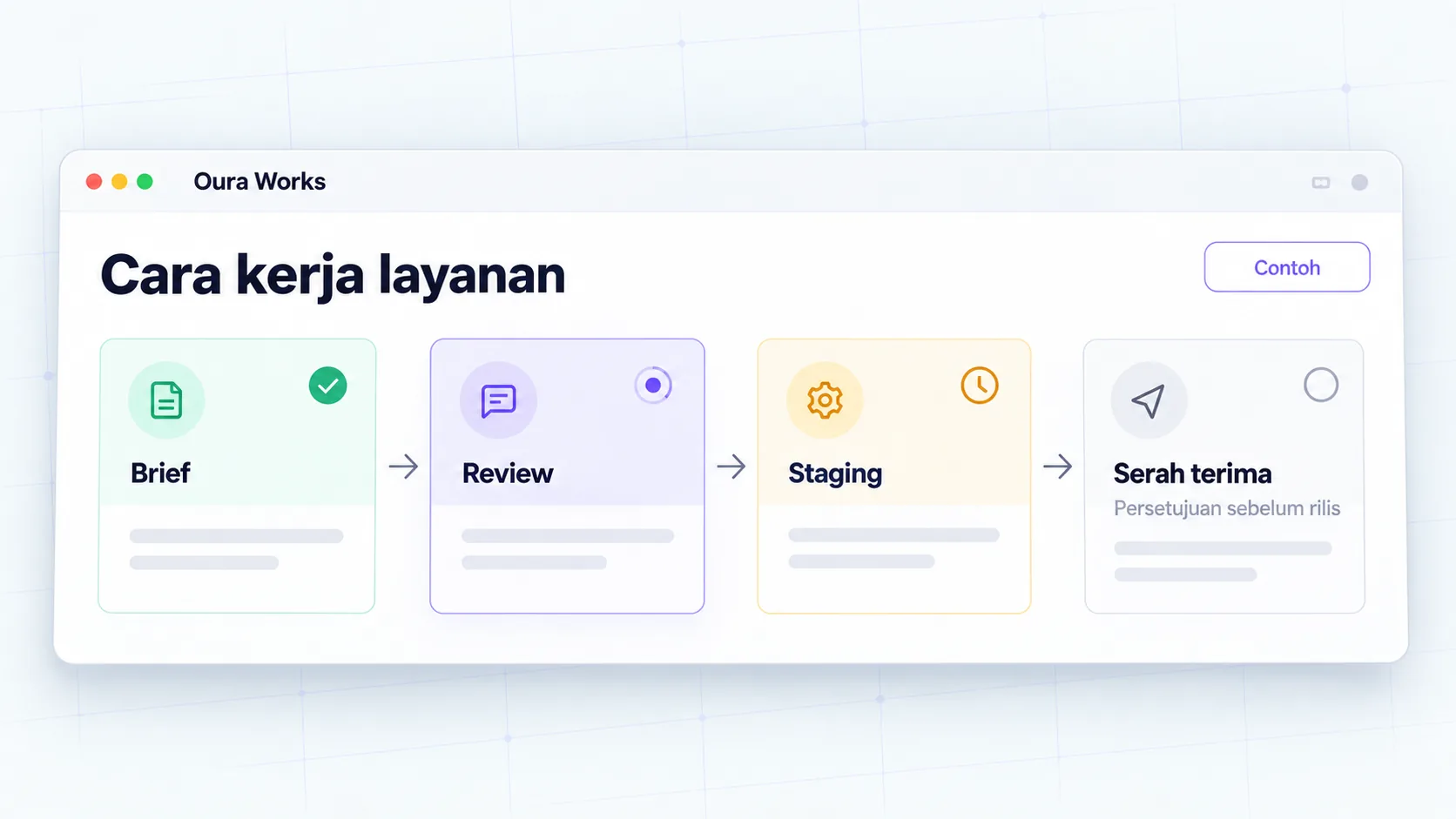
| Page section | Main content | Review questions |
|---|---|---|
| Hero | Services, customers and benefits | Do new people understand the offer? |
| Coverage | Output and work limits | What is not included is clear? |
| Process & proof | Work stages and relevant examples | Can claims be checked? |
| Contact | Initial steps and necessary information | Did the inquiry reach the team? |
Replace the example lines with your business conditions. Mark information that already has evidence, that is still an assumption, and that needs to be asked of the person in charge.
CHAPTER 04 / REVIEW POINT
Avoid decisions that seem right, but have not been tested.
Using jargon to your advantage
Explain the impact on the buyer's work. “Integration” needs to explain what systems are connected and for what tasks.
Installing a CTA that is not prepared
Provide buyers with the information they need before inviting them to contact.
If a decision impacts costs, access, data, or other teams' work, list the parties who need to approve it. Explain the evidence that is available and the extent of information that remains to be examined.
CHAPTER 05 / WORKBOOK
Make your plans here.
Fill in concisely and specifically. For information that is not yet available, write who needs to be asked for confirmation. These notes are not sent by the Playbook feature to Oura; download before the tab closes.
Do not enter passwords, access tokens, or personal customer data. Temporary storage follows the browser tab session, not the Oura account.
CHAPTER 06 / BEFORE SUBMISSION
Check your job readiness.
This checklist records the tasks you marked. It is not an audit score, certification, or automatic assessment of a website.
Frequently asked questions
Does the copy have to be long?
Length follows the complexity of the decision. Organize information in easy-to-scan sections and avoid repetition.
Are case studies mandatory?
Use available evidence honestly. A transparent process is better than fake testimonials or results.
Referral & usage limits
References checked on October 2, 2026. Steps, examples and worksheets are Oura editorial formulation with the help of AI and public references. Examples are not client results. The guide does not guarantee business results and does not replace a dedicated examination of your systems.