















CHAPTER 01 / BEFORE YOU BEGIN
Prepare your materials. Define the deliverables.
Business owners, project managers, marketing, and vendors who prepare website or optimization projects.
Starting materials
- Prioritized business goals
- List of stakeholders and content owners
- Known assets, systems, and requirements
What you will prepare
Discussion-ready brief with work boundaries and acceptance criteria.
Use it as material for decisions and discussions, then adjust the work limits to your conditions.
Starting from one page, one process, or one most important need. Note unknowns as questions; Don't force answers just to make the worksheet look finished.
CHAPTER 02 / WORK STEPS
Work in a clear order.
Write down the problem and objectives that can be evaluated
A “modern website” does not yet explain the business problem. Write down what needs to be easier to do, such as finding specifications or sending project requirements. Differentiate business targets that are influenced by many factors from technical criteria that can be checked at handover. Avoid making Google's position a definite condition of acceptance.
Turn requirements into explicit outputs
Take note of required pages, templates, integrations, content, and documentation. Determine who provides facts, photos, legal copies, and access. For things that aren't clear, write down the necessary assumptions and decisions, rather than sneaking them into the scope. Separate early phase requirements from subsequent development.
Agree on how changes are assessed
For each output, write down the acceptance criteria and the approved authority. Determine the number or limit of reviews according to the proposal, feedback channels, and how to handle new requests. Feedback should address versions and requirements; don't let decisions be spread across many conflicting conversations.
Arrange sequences with real dependencies
Schedules depend on material readiness, access, and decisions. Write down what must be available before design or implementation begins. At handover, check documentation, owner accounts, forms, and any outstanding items. Note follow-up and treatment coverage separately so they are not considered automatically included.
CHAPTER 03 / EXAMPLE SURGERY
Connect steps to real decisions.
Professional services website project exercise: the target “more inquiries” is translated into tasks that can be submitted and tested, while business results are still evaluated after the website is used.
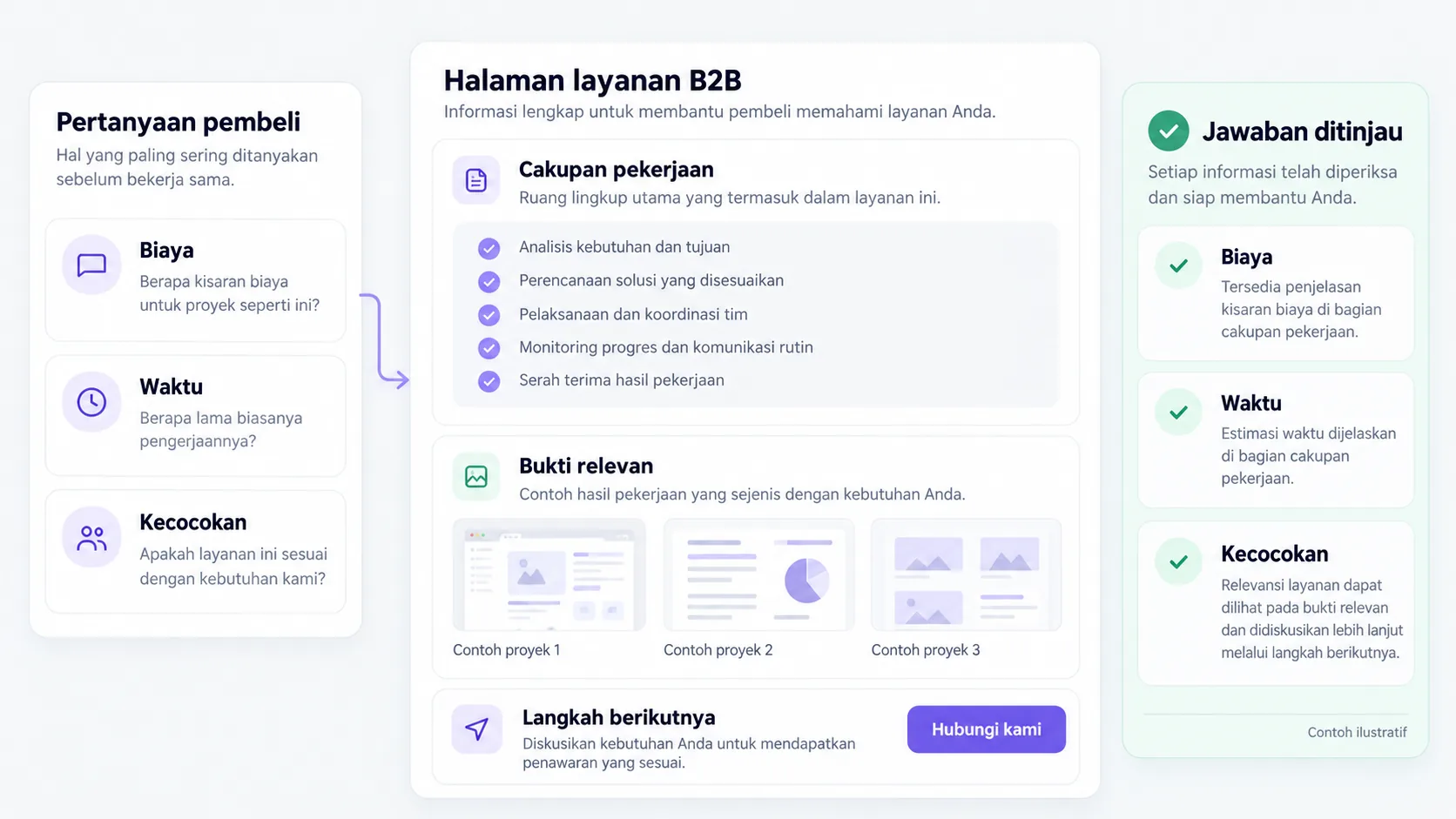
| Outputs | Acceptance criteria | Owner input/review |
|---|---|---|
| Services page | Scope and limits according to brief | Service owner |
| Consultation form | Validation, status, acceptance successful | Developer and operations |
| Measurement | Test events according to specifications | Marketing / analyst |
| Documentation | Owner and guide access available | Website owner |
Replace the example lines with your business conditions. Mark information that already has evidence, that is still an assumption, and that needs to be asked of the person in charge.
CHAPTER 04 / REVIEW POINT
Avoid decisions that seem right, but have not been tested.
Calls “unlimited revisions” without limits
Agree on how to review and what includes scope changes.
Locking schedule without input readiness
State dependencies so that material delays can be handled openly.
If a decision impacts costs, access, data, or other teams' work, list the parties who need to approve it. Explain the evidence that is available and the extent of information that remains to be examined.
CHAPTER 05 / WORKBOOK
Make your plans here.
Fill in concisely and specifically. For information that is not yet available, write who needs to be asked for confirmation. These notes are not sent by the Playbook feature to Oura; download before the tab closes.
Do not enter passwords, access tokens, or personal customer data. Temporary storage follows the browser tab session, not the Oura account.
CHAPTER 06 / BEFORE SUBMISSION
Check your job readiness.
This checklist records the tasks you marked. It is not an audit score, certification, or automatic assessment of a website.
Frequently asked questions
Does this worksheet replace a contract?
No. This is the material for preparing the brief; Commercial terms and responsibilities still need to be agreed in the cooperation document.
What if needs change?
Note changes, cost or schedule impacts, and approvals prior to additional work.
Referral & usage limits
References checked on October 2, 2026. Steps, examples and worksheets are Oura editorial formulation with the help of AI and public references. Examples are not client results. The guide does not guarantee business results and does not replace a dedicated examination of your systems.