














CHAPTER 01 / BEFORE YOU BEGIN
Prepare your materials. Define the deliverables.
Marketing teams and businesses running Google Ads, Meta Ads, or other paid campaigns.
Starting materials
- Copy and campaign goals
- Offer with valid conditions
- Lead reception and measurement pathways
What you will prepare
Campaign message map, landing page outline, and lead evaluation plan.
Use it as material for decisions and discussions, then adjust the work limits to your conditions.
Starting from one page, one process, or one most important need. Note unknowns as questions; Don't force answers just to make the worksheet look finished.
CHAPTER 02 / WORK STEPS
Work in a clear order.
Match the advertising message to the landing page
Choose a buyer's needs and an offer that can be provided. Match the ad headline, page content, and the region or segment served. If the ad mentions prices or promotions, display the terms clearly. Don't take people to generic pages that make them search for offers from the start.
Provide information before requesting action
Explain the benefits, scope, process, and what buyers need to know. One main CTA can help focus, but supporting information and useful navigation still need to be available. Don't hide important requirements in order to increase the number of submission forms. The evidence must relate to the offer and not be fabricated.
Design forms and lead intake
Determine the minimum information required for an initial response. Explain why additional fields are required if requesting project context. Keyboard testing, validation, failed sending, and receiving in email or CRM. On-screen success is not enough if leads do not enter the operational process.
Evaluate costs along with quality
Define clicks, website leads, meets-the-criteria leads, and transactions separately. Use clear periods, data sources and campaign conditions. Compare changes carefully if offers, budgets, or audiences change accordingly. Optimization does not guarantee ROI; The quality of sales follow-up also needs to be checked.
CHAPTER 03 / EXAMPLE SURGERY
Connect steps to real decisions.
Website audit service campaign exercise: the purpose of the form is to gather initial needs, not promise instant comprehensive audit results.
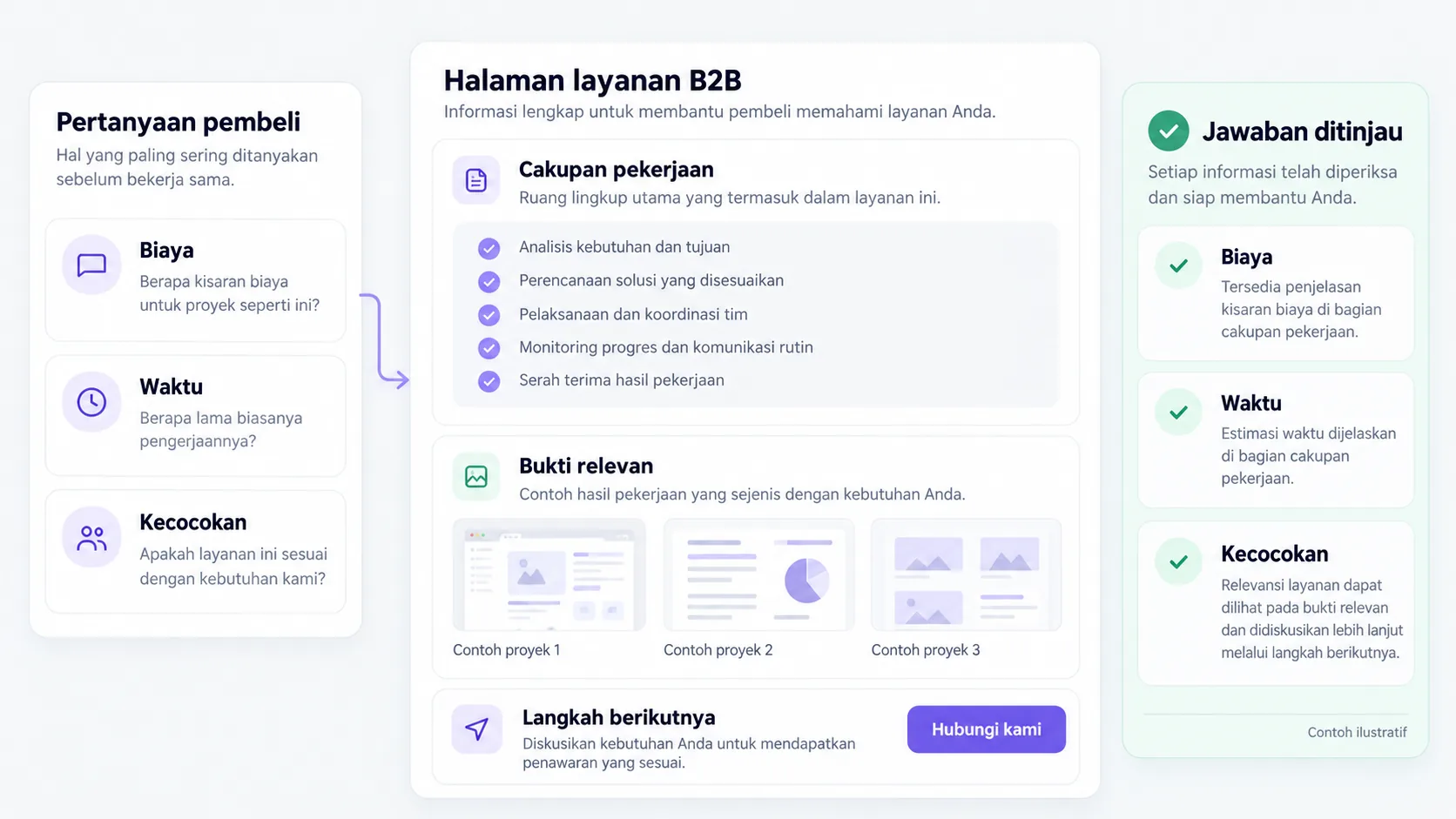
| Elements | Example practice | What needs to be checked |
|---|---|---|
| Advertisement | Discuss website improvement priorities | According to available offers |
| Hero | Understand website obstacles before deciding on work | Does not promise instant diagnosis |
| Form | URL, requirements and work contacts | Data is received and used according to its purpose |
| Evaluation | The lead is accepted and meets the criteria | Don't just count submit clicks |
Replace the example lines with your business conditions. Mark information that already has evidence, that is still an assumption, and that needs to be asked of the person in charge.
CHAPTER 04 / REVIEW POINT
Avoid decisions that seem right, but have not been tested.
Removing important information in favor of a single CTA
Focus means assisting decisions; Relevant requirements and information are still required.
Call all leads customers
Separate the stages of the website and sales process before discussing business results.
If a decision impacts costs, access, data, or other teams' work, list the parties who need to approve it. Explain the evidence that is available and the extent of information that remains to be examined.
CHAPTER 05 / WORKBOOK
Make your plans here.
Fill in concisely and specifically. For information that is not yet available, write who needs to be asked for confirmation. These notes are not sent by the Playbook feature to Oura; download before the tab closes.
Do not enter passwords, access tokens, or personal customer data. Temporary storage follows the browser tab session, not the Oura account.
CHAPTER 06 / BEFORE SUBMISSION
Check your job readiness.
This checklist records the tasks you marked. It is not an audit score, certification, or automatic assessment of a website.
Frequently asked questions
Does a landing page have to be without a menu?
Not always. Navigation options follow user needs and experience. Don't omit information that is important to the decision.
Will changing pages reduce advertising costs?
Not necessarily. Relevance, offer, targeting, competition, and quality of follow-up also influence results.
Referral & usage limits
- Google Ads: ad landing page ↗
- W3C: labels for forms ↗
- Google Analytics: avoid personally identifiable data ↗
References checked on October 2, 2026. Steps, examples and worksheets are Oura editorial formulation with the help of AI and public references. Examples are not client results. The guide does not guarantee business results and does not replace a dedicated examination of your systems.