

















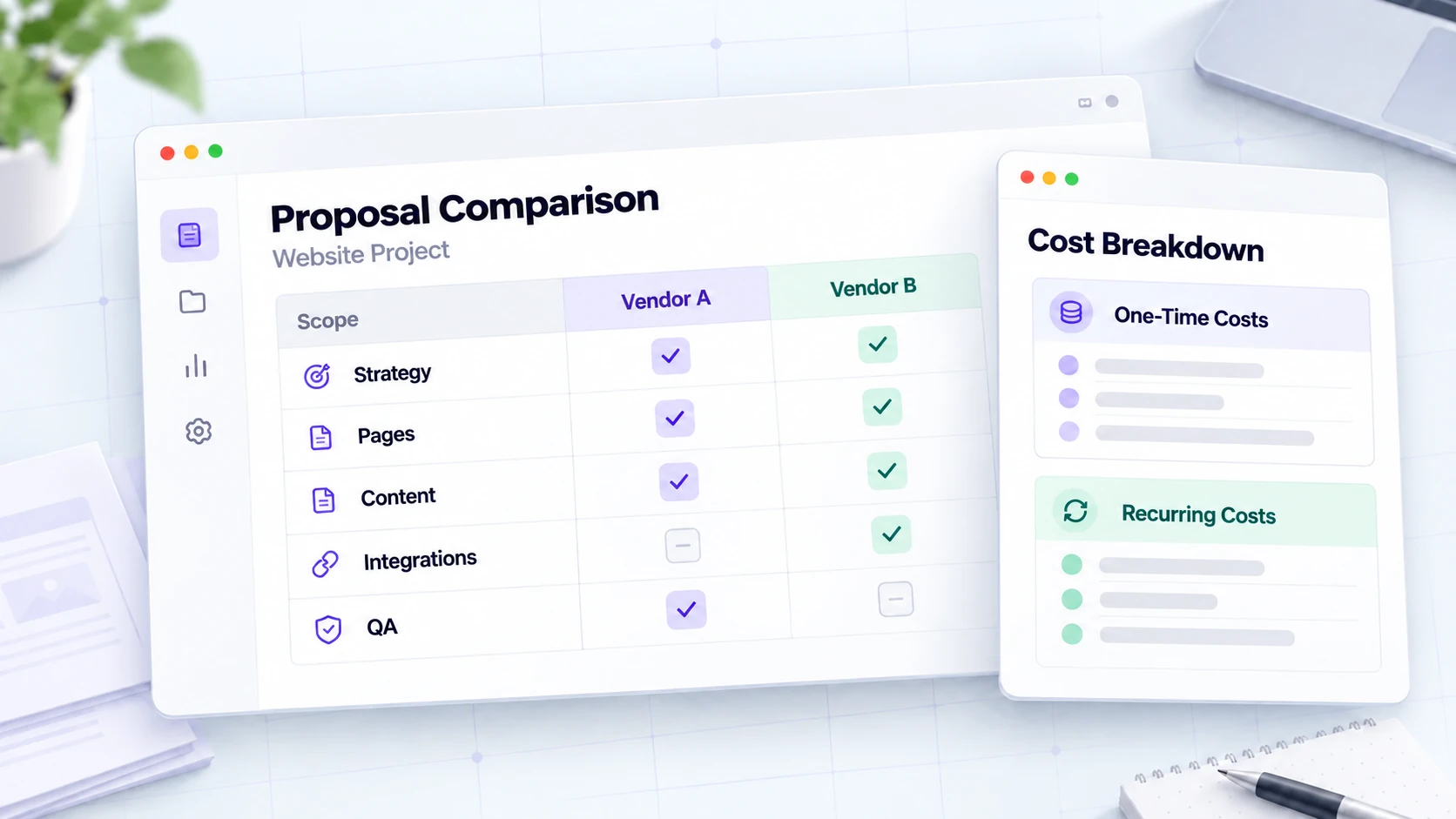
The cost of building a business website depends on the project scope: its goals and number of pages, design and content needs, functionality and integrations, testing, and post-launch support. Since proposals can include different deliverables, compare the work and responsibilities before comparing prices.
A practical approach is to separate three costs: initial build costs, recurring or third-party costs, and future work not included. This helps you estimate project needs without relying on an “average price” that may not cover comparable work.
What makes up the cost of building a website?
A website may look simple, but the work behind it can vary. An informational company website is different from a catalog with filters, a quote request form, and a follow-up process. You can only compare prices once the deliverables have been spelled out.
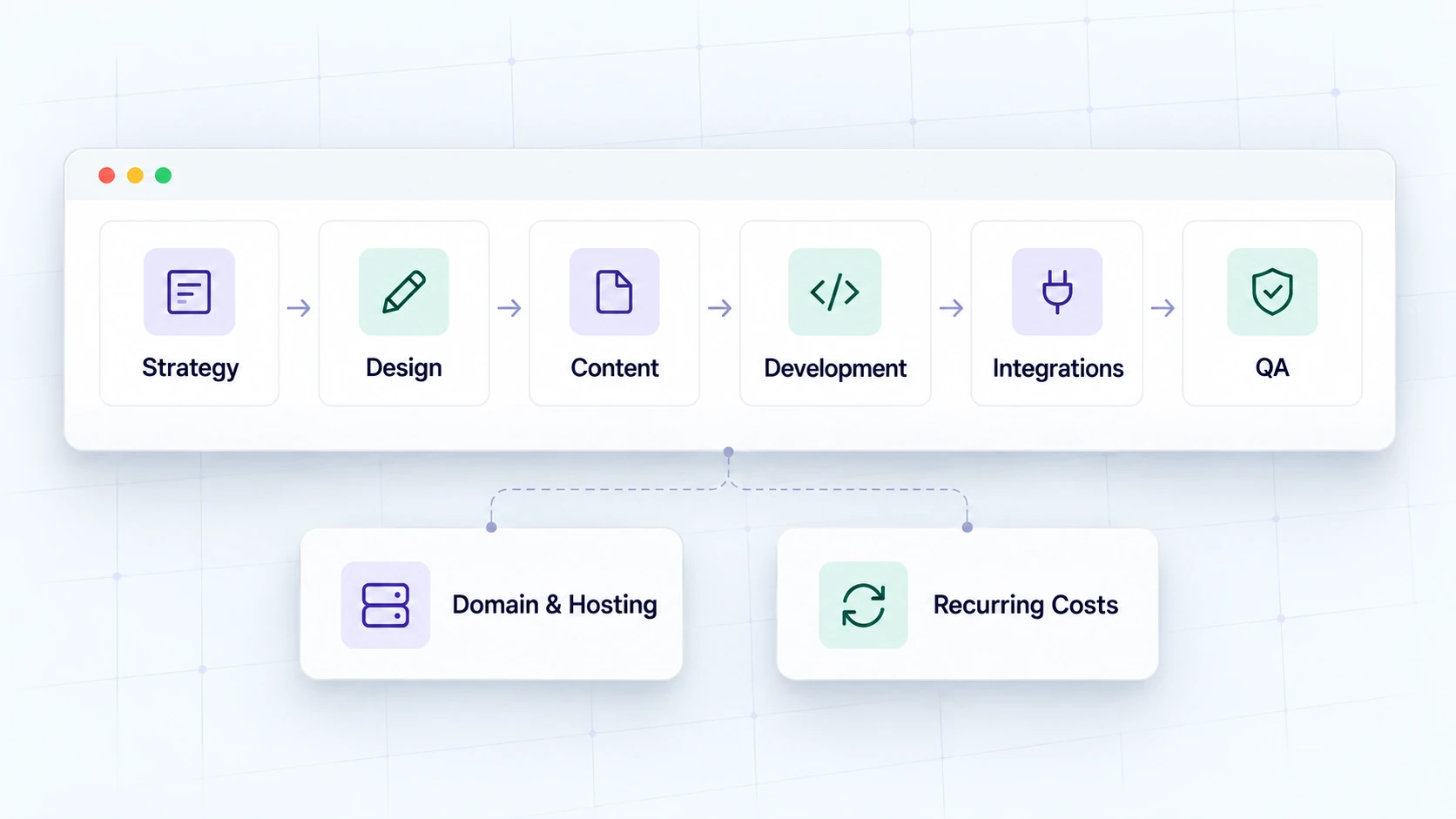
| Components | What to confirm in the proposal | Why it matters |
|---|---|---|
| Goals and planning | Website goals, primary users, page requirements, and launch priorities | Helps identify the work that is actually needed |
| Structure and design | Number of unique templates, mobile versions, components, and the review process | Pages with different layouts and requirements need different design work |
| Website copy and assets | Who writes, reviews, translates, and supplies photos or data | Content that is not ready can add coordination or revision work |
| Features | Forms, catalogs, search, bookings, payments, or member-only areas | Each feature needs to be designed and tested according to its workflow |
| Integration | Destination system, access/API, fields to transfer, and failure handling | Integrations depend on third-party systems and account conditions. |
| Testing (QA) and launch | Devices to review, test scenarios, URL migration, analytics, and handover | Pre-launch checks reduce the risk of missing important functionality |
| Support | Duration, types of updates, response times, and work outside the package | Defines costs and responsibilities after the website goes live |
Terms such as “company website,” “catalog site,” and “online store” are only starting points. Two businesses requesting a company website may differ in the number of languages, portal requirements, content readiness, internal approvals, and integrations. Those details are what you need to compare.
Separate upfront, recurring, and additional costs
The initial project price may not cover all the costs of running a website. List separately what is paid during the build, what recurs, and what may be needed as the business grows.
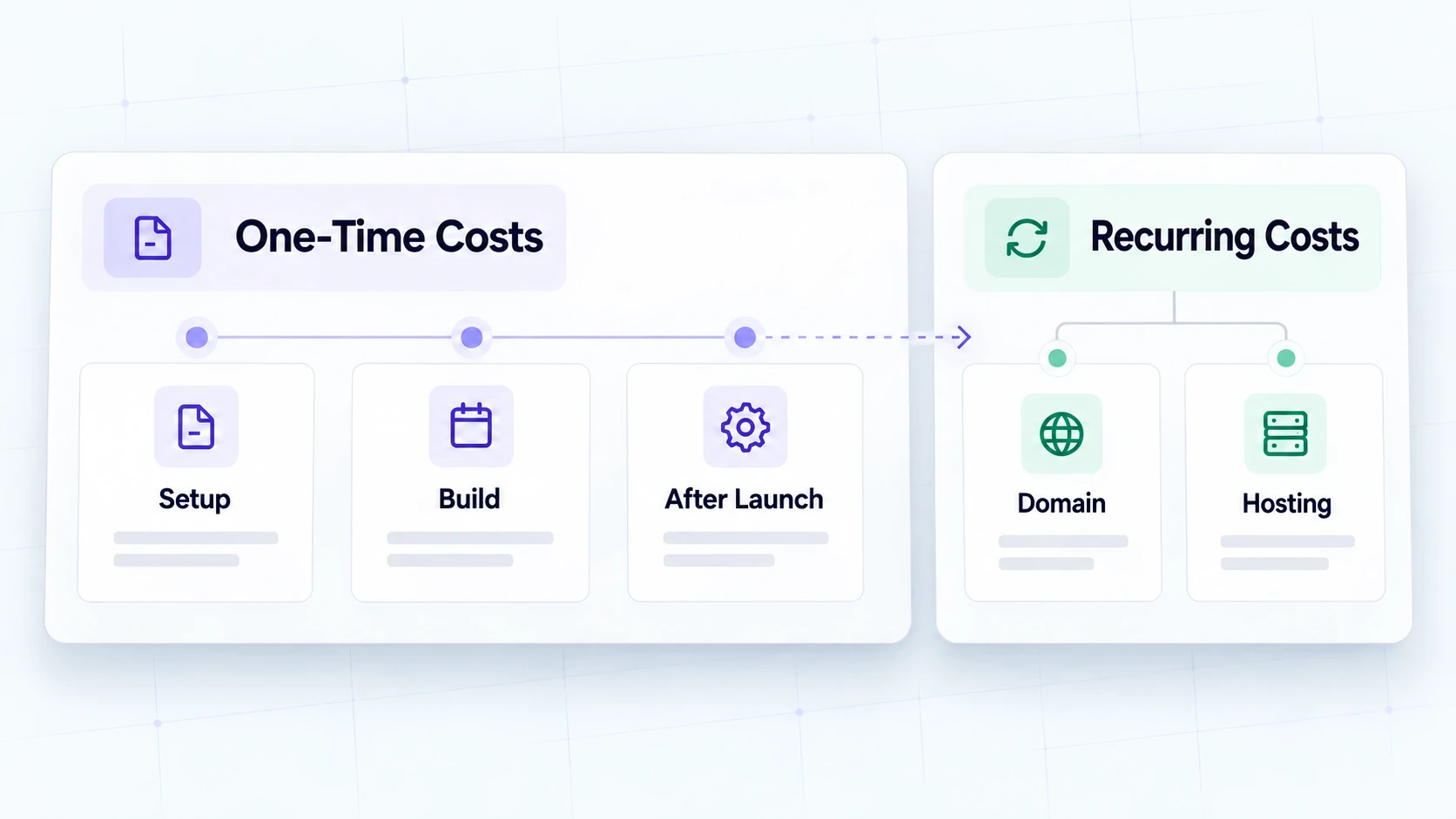
| Cost type | Examples to check | Questions to answer |
|---|---|---|
| Initial build | Research, design, copywriting, development, migration, integrations, and QA | What are the final deliverables and their acceptance criteria? |
| Recurring | Domain, hosting/infrastructure, licenses, maintenance, and email services | Who owns the account, and when is it billed for renewal? |
| Usage-based | Transaction fees, storage capacity, messaging, or advertising spend | What is the basis for the calculation, what are the limits, and who charges the fee? |
| Future changes | Additional pages or features, integration changes, new migrations | How are out-of-scope requests approved and priced? |
Domain, hosting, email, licenses, and ad spend may be billed by different providers. Do not assume these are included or excluded. Ask for the service name, account owner, billing period, and renewal process in writing. Advertising spend is also separate from campaign management fees.
To estimate the total, first set the period you want to assess. Then add the initial build cost, recurring costs over that period, relevant usage-based costs, and known changes. Record assumptions, such as product count, languages, or integrations, so the comparison does not shift without notice.
A simple working formula:
Total for the selected period = initial build cost + monthly fees for the period + usage-based costs + approved additional work.
Do not count items already included in a package twice. At the same time, do not omit items billed directly by another provider. List the payee and billing period next to each figure.
Example Oura website package prices
For a transparent comparison, this table summarizes the small-business prices listed on the Oura pricing page as of October 8, 2026. These are Oura’s package service prices, not a claim about average prices across all website providers.
| Oura package | 6-month contract | 6-month total | 12-month contract | 12-month total |
|---|---|---|---|---|
| Small Business Website | Rp4,000,000/month | Rp24,000,000 | Rp3,400,000/month | Rp40,800,000 |
| Website + SEO | Rp7,000,000/month | Rp42,000,000 | Rp5,950,000/month | Rp71,400,000 |
| Website + Ads | Rp10,000,000/month | Rp60,000,000 | Rp8,500,000/month | Rp102,000,000 |
The monthly rate on a 12-month contract is 15% lower than the monthly rate on a 6-month contract. The 12-month contract total is still higher because the service runs twice as long. The Small Business Website package includes research, copywriting, design, website development, measurement, evaluation, and monthly maintenance under the package terms. Ad spend and third-party fees are billed separately. The latest details and package limits are set out on the pricing page and in the proposal.
When comparing this with another proposal, match the service period and deliverables. A monthly package with ongoing management is not directly comparable with a one-time build price. If you want to see options by scope, use the pricing page as a starting point, then ask about any requirements not listed.
Three example scopes for comparing requirements
The examples below illustrate project scopes, not required packages or market price benchmarks. Use them to explain your needs when requesting a proposal.
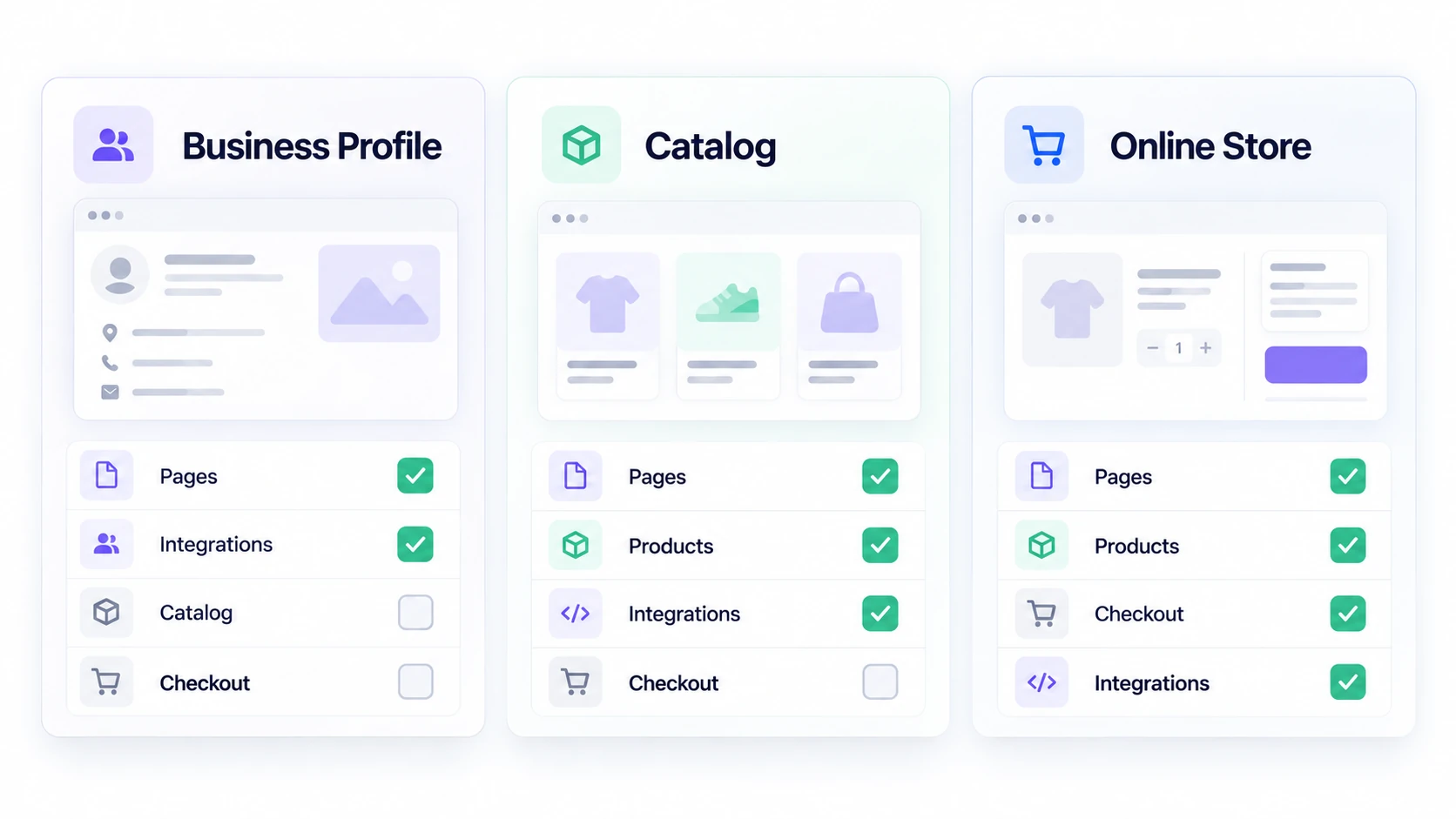
| Simulation scenario | Potentially included requirements | What needs to be defined further |
|---|---|---|
| Business website | Business information, services, evidence approved for publication, and contact channels | Number of unique pages, materials to be supplied, languages, and forms |
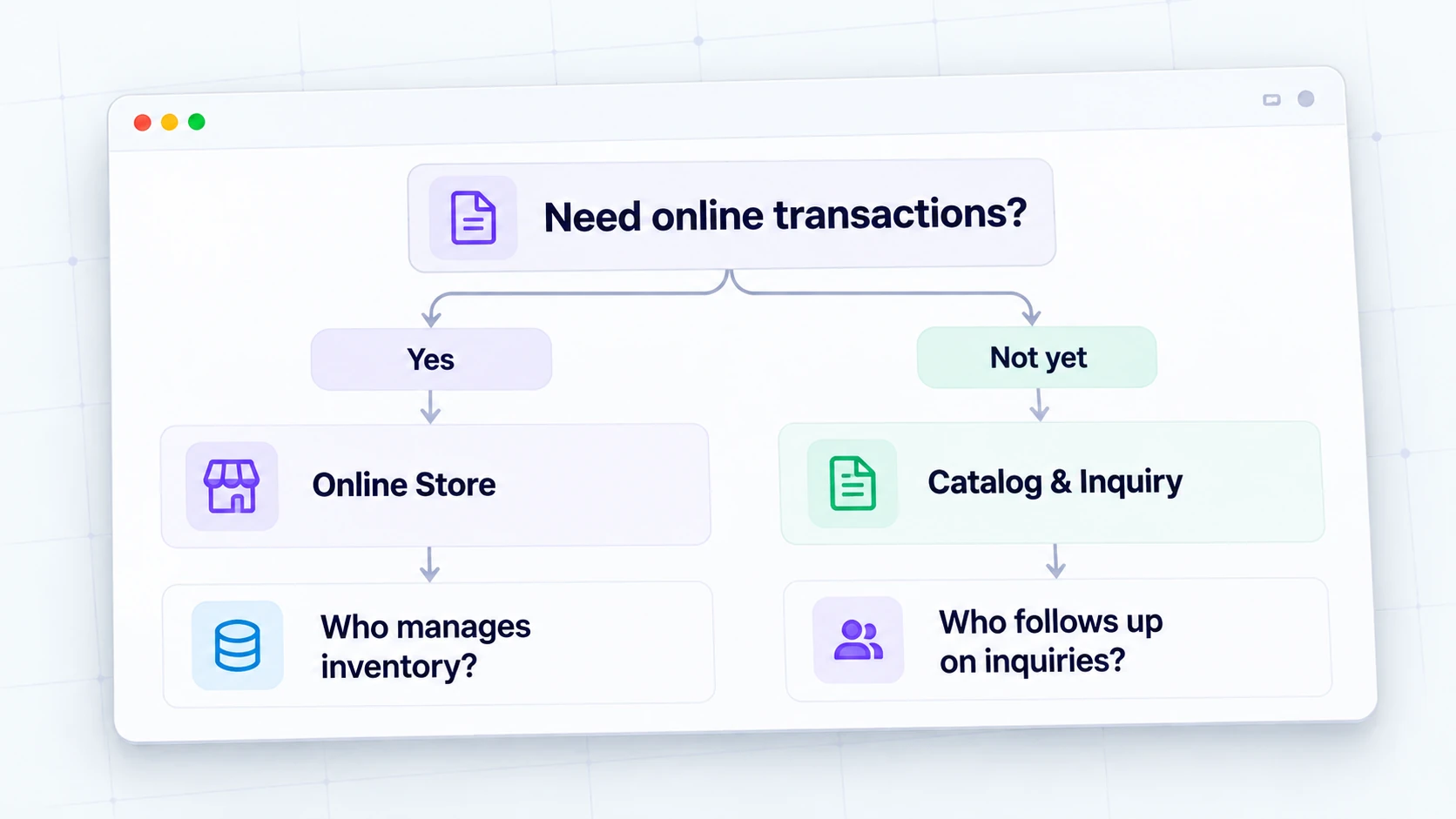
| Catalog and inquiry | Categories or service/product listings, specifications, and quote requests | Number of items, how data is updated, filters, and who receives inquiries |
| Online store | Product catalog, cart, checkout, payments, and shipping information | Variants/inventory, payment provider, shipping rules, notifications, and reconciliation |
Unwritten requirements are a common source of price differences. For example, one proposal may only cover a catalog, while another also includes data migration, admin training, payment testing, and analytics. You cannot compare them by total price alone.
How to compare two website proposals
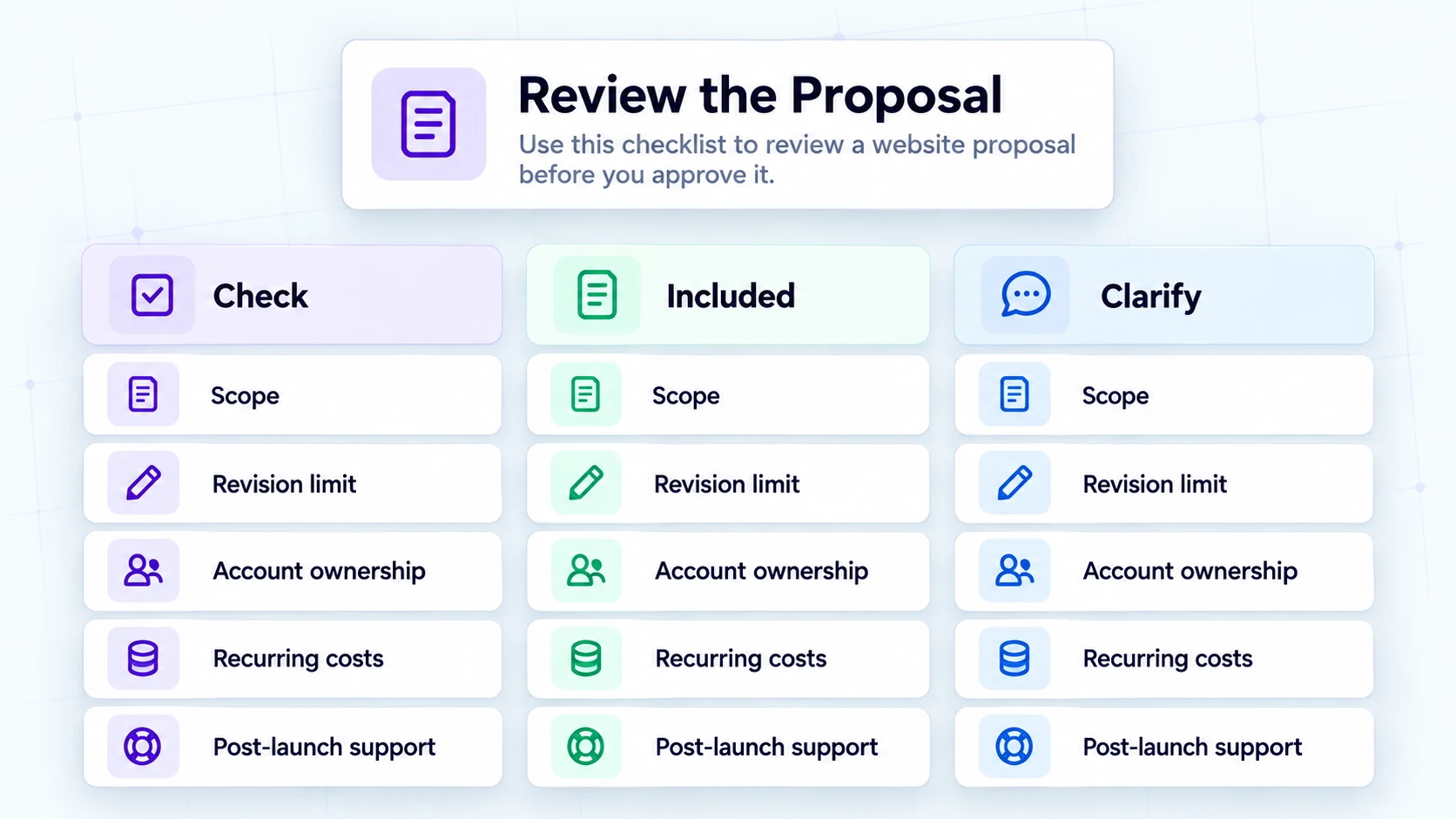
Use one working document for each provider. If information is unavailable, mark it “to be confirmed”; do not fill it in based on assumptions.
| Proposal section | Proposal A | Proposal B |
|---|---|---|
| Goals, users, and pages included in the work | ||
| Who provides the copy, photos, and data? | ||
| Included features and integrations | ||
| Number of review rounds and how to provide feedback | ||
| QA, devices, and acceptance scenarios | ||
| Domain, hosting, licenses, and account ownership | ||
| Training, documentation, and handover | ||
| Post-launch support and exclusions | ||
| Payment terms and schedule assumptions |
After completing the table, mark each item as included, optional, to be confirmed, or out of scope. Ask for a revised proposal if an important point was only explained verbally. Acceptance criteria should be testable, such as confirming that a form sends the agreed information, rather than simply saying the “website looks good.”
Create a cost worksheet before comparing figures
Before contacting providers, write down your minimum requirements and those that can wait. Then ask each provider to respond in the same format. Example worksheet:
| Cost item | Value from the proposal | Note |
|---|---|---|
| Initial build | Rp… | Pages, content, functionality, and integrations included |
| Recurring service costs | Rp… per month × … months | State the service period being compared |
| Domain, infrastructure, and licenses | Rp… | State who bills for the service and manages the account |
| Usage-based costs | Rp… or not yet known | For example, transactions or messages; ask how the fee is calculated |
| Allowance for uncertain requirements | Rp… | Keep this separate from the agreed proposal |
| Estimated total for the period | Rp… | Add only the items that apply to that period |
This worksheet is not meant to guess market prices. It helps ensure a proposal does not look cheaper simply because hosting, content, integrations, or support are listed elsewhere. If a provider cannot yet price an item, note what needs to be checked and who is responsible for confirming it.
Factors that commonly change an estimate
Small changes to a brief can change the type of work involved. Distinguish the number of pages from the number of page templates: ten pages using the same template may require different work from ten pages, each with its own features and layout.
- Content is not ready. Copy, photos, product specifications, branch data, and legal approvals all need clear owners and timelines.
- Data migration may be required. Migration requires the team to assess the source format, data quality, old URLs, and how to verify the results.
- Features connect to other systems. Forms, CRM, payments, inventory, or scheduling may depend on access, fees, and documentation from other providers.
- Several stakeholders are involved in approvals. Appoint one coordinator to consolidate feedback so review rounds and decisions do not repeat.
- There may be work to do after launch. Content updates, monitoring, backups, and technical assistance should be distinguished from the initial build.
If any of this is unknown, it does not mean you need to stop the project. Mark it as an assumption, ask the provider to explain its impact, and agree when you need to decide. This lets you assess genuinely new requests before additional work begins.
Also ask who owns the domain, hosting, analytics accounts, design, content, and administrator access. Ownership of files or third-party licenses follows the relevant agreements, so do not infer it from the phrase “client-owned website.” Request a handover process and the access your business is entitled to.
The lowest price may be right if the scope, risks, and support fit your needs. A higher price is not automatically better if its deliverables are unclear. Assess each proposal by the work delivered, agreed responsibilities, costs over the same period, and your team’s capacity to manage the site.
Questions to ask before approving the cost
Before signing, make sure you receive written answers to these questions:
- Which pages, features, languages, and materials are part of the project?
- What does the business team need to provide, and by when?
- How many review rounds are included, and who will consolidate the feedback?
- Which systems are being integrated, and what happens if a destination service fails?
- How will QA be carried out, and who approves the work before launch?
- Who owns the accounts, files, content, data, domain, and licenses?
- What recurring charges apply, and what work is excluded?
- How do scope changes affect the cost and schedule?
These questions are not a formality. The clearer the project boundaries and dependencies, the easier it is for both parties to estimate the work, manage changes, and assess the outcome.
Website package or custom development?
Packages are easier to assess when your needs fit a clearly defined scope, the process is repeatable, and custom integrations are limited. Custom development is worth discussing when business workflows, access rules, catalogs, or integrations cannot be handled safely within a standard scope.
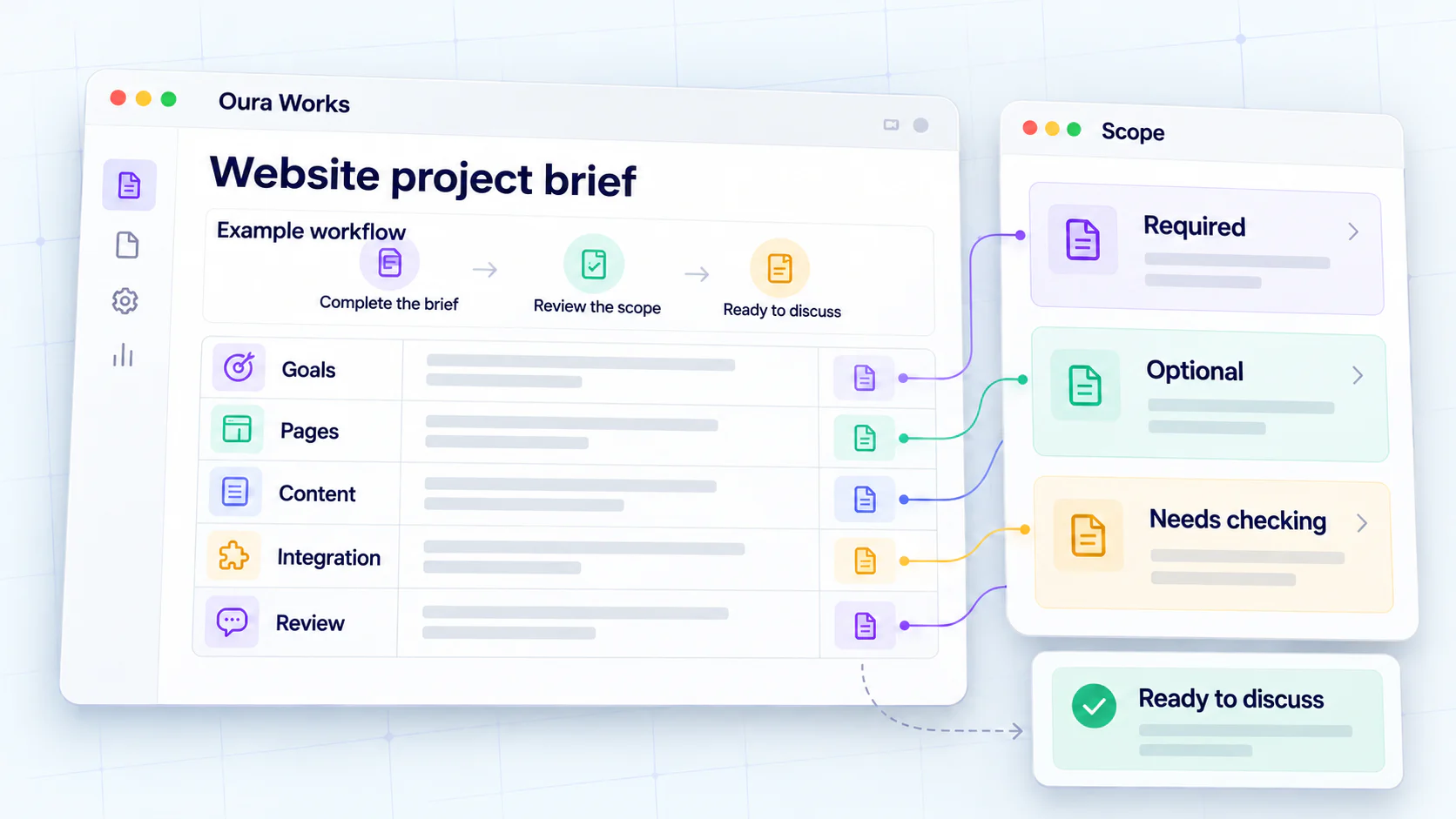
At Oura, you can find website package details and contract terms on the pricing page. For technical requirements, see Oura’s website development service, corporate website solution, and a guide to preparing a website project brief. Match your needs to the scope actually available, and ask for clarification about anything not listed.
Google recommends creating content to help readers and provide original, substantial information. Its guidance also says there is no preferred word count to target. For that reason, price comparisons should focus on information that helps you make a decision, not unsourced market figures or promises that cannot be substantiated. See Google’s guidance on helpful, people-first content.
FAQs
What is usually included in the cost of building a website?
It depends on the proposal. Costs may cover planning, design, copywriting, page development, features, integrations, QA, and handover. Make sure the number of pages, materials, review rounds, and exclusions are documented.
Are the domain and hosting included?
Not always. Ask who the provider is, who owns the account, who pays, the billing period, and the renewal process. Also check the cost of email, licenses, and required third-party services.
Why can website proposals differ so much?
Scope and responsibilities may differ: number of templates, content creation, migration, integrations, testing, revisions, account ownership, and post-launch support. Align these items before comparing totals.
How can you compare prices without simply choosing the cheapest option?
Compare deliverables, QA criteria, recurring costs, project assumptions, asset ownership, and support over the same period. Flag any uncertainties and request written clarification before approving the proposal.
Explore guides and stories about similar decisions.
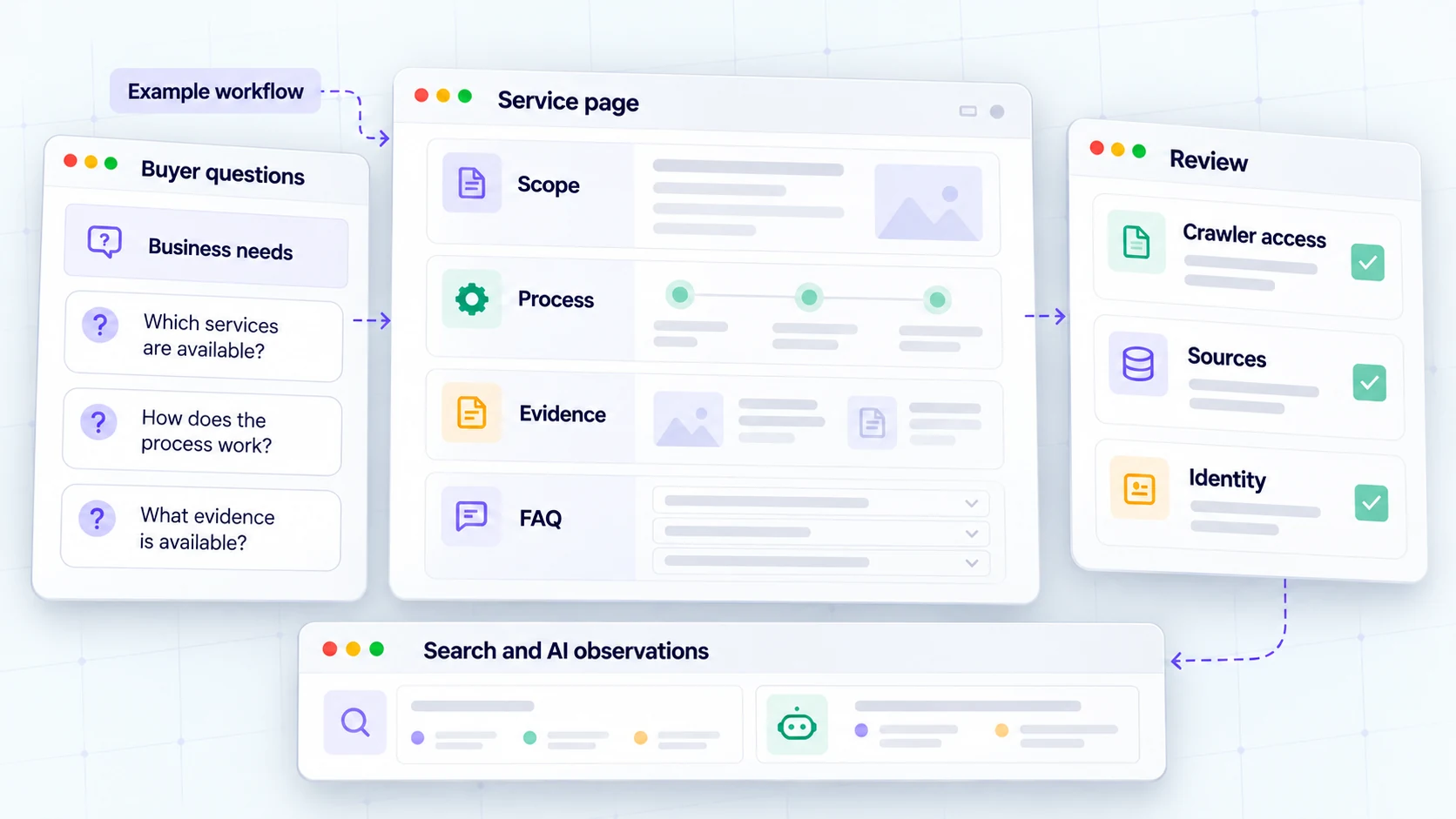
SEO and AI visibility: a guide for business websites
Maintain technical access and information that helps readers.
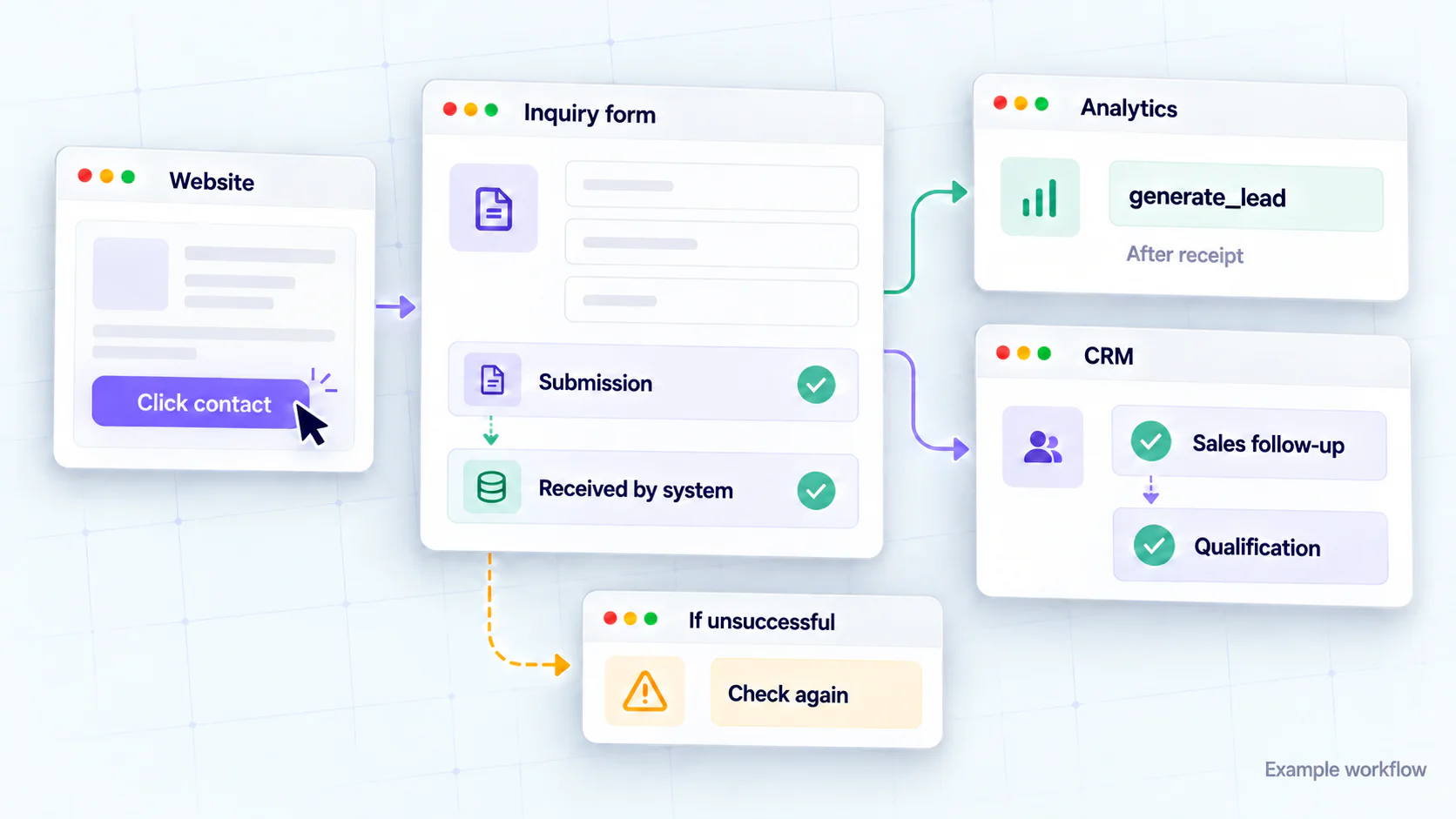
Measuring leads with GA4: events, inquiries, and lead quality
Connect website actions to sales context.
Website project brief: sample content, scope, and checklist
Agree on project goals, scope, and decisions.
Service page content: benefits, scope, evidence, and CTAs
Clarify benefits, scope, evidence and next steps.