
















Oura Insights • Updated October 2, 2026
Service page content: benefits, scope, proof, and CTA

Oura Works
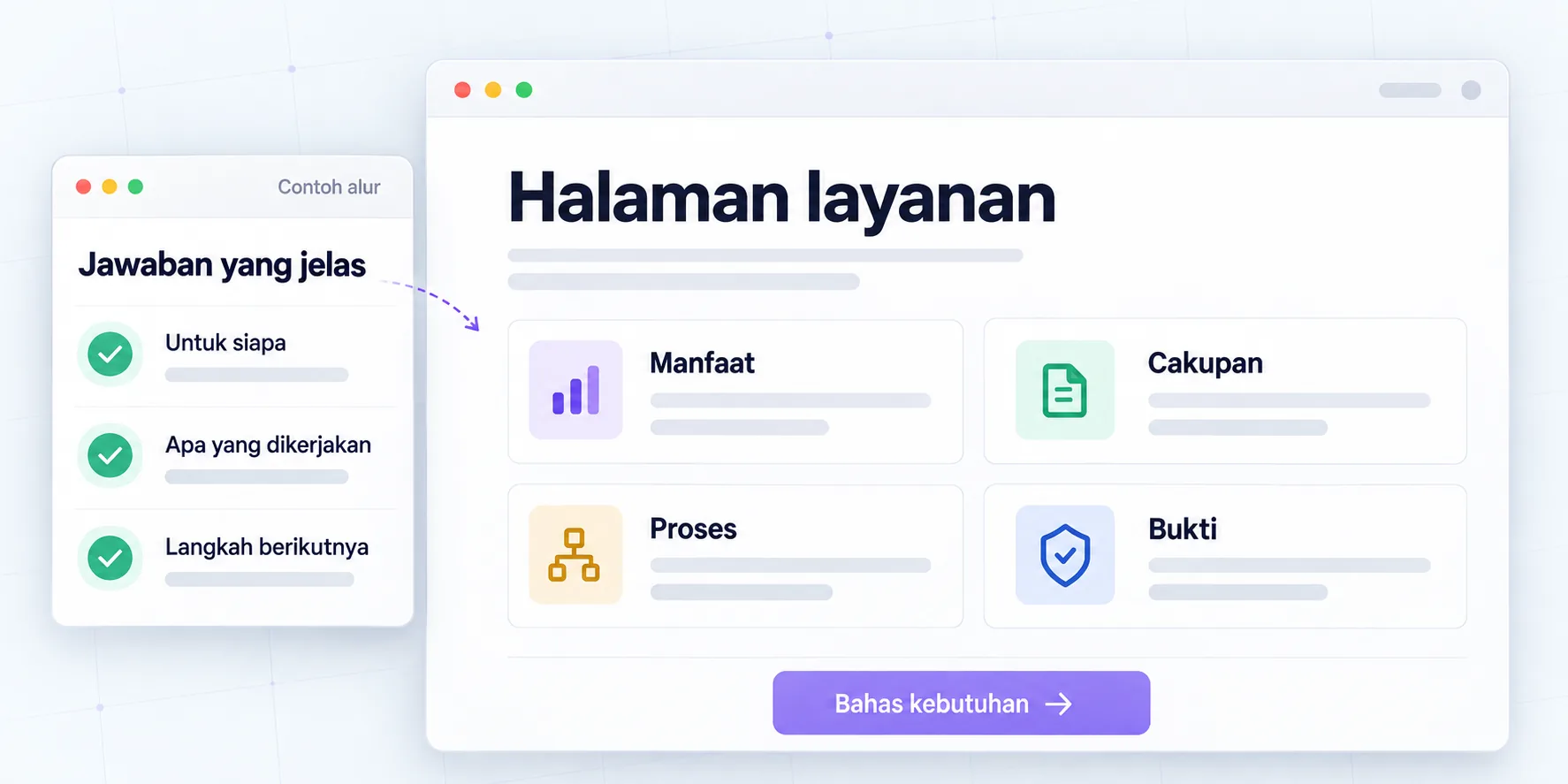
Service page content helps potential customers understand whether the offer meets their needs, what is done, what the process is, what evidence is available, and next steps. Compelling copy still needs to answer the question with an explanation that can be checked.
Phrases like “the best solution for business growth” do not yet help buyers compare services. They still need to know the deliverables, scope limits, needs of their team, and how to request a quote. The clearer the information, the more useful the page will be before the sales conversation begins.
This guide contains Oura editorial recommendations for service websites. Copy and process examples are simulations, not claims of customer engagement or results. Real offers need to be reviewed by the service owner before being published.
Summary before writing
- Starting from the buyer's needs and decisions that need help.
- Mention the concrete job, suitability, as well as service limits.
- Explain the process and client contributions so buyers understand how to work together.
- Use evidence that is relevant, sourced, and permitted for publication.
- Differentiate between reference prices, estimates, and scope pending inspection.
- Choose a CTA that explains the next step; Don't promise something that isn't yet available.
1. What do buyers need to understand?
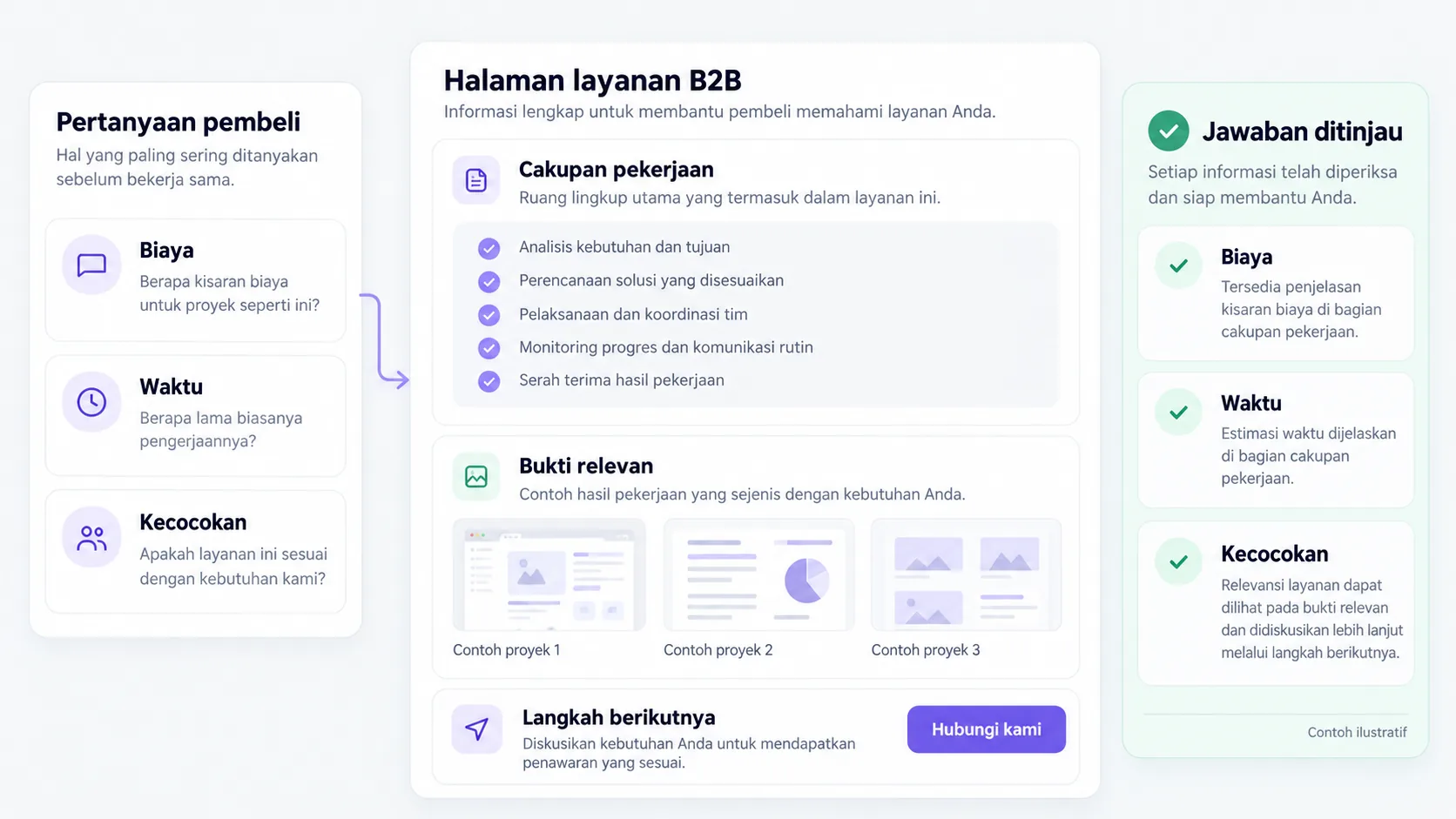
Buyers need to know the problems they can help with, the conditions they are suited to, and the work being offered. They also need to understand the reasons for choosing certain services over other options. This explanation should come before a long list of technology or process jargon.
Determine the main questions from inquiry notes, sales conversations, and research that can be used. Don't assume all buyers understand internal terms. A website development page, for example, can explain the differences between information websites, catalogs, and web applications through their usage requirements.
| Buyer questions | Page section | Material for review |
|---|---|---|
| Is it suitable for me? | Openers and matches | Business needs and initial conditions |
| What will be done? | Scope and deliverables | List of deliverables and limits |
| How is the process? | Work stage | Reviews, dependencies, team contributions |
| Why is this offer worth considering? | Evidence | Cases, work examples, relevant references |
| How to start? | CTA and preparation | Contact lines and initial materials |
Use tables as an editorial tool, not as a necessity to add five new sections. On existing websites, map answers to available slots and maintain the agreed visual experience.
2. How to write an opener that directly explains the service?
The opener can mention needs, type of work, and intended benefits without providing certainty of results. “A company website that helps buyers understand services and deliver needs” is more concrete than “unlimited digital transformation.” Readers can imagine the functions offered.
Differentiate intended benefits from proven results. The word “help” is not a substitute for proof if the next sentence still promises a certain increase in sales. Check whether the explanation is within scope and within the control of the team.
For offers with multiple types of needs, use a brief summary and then navigate to the options. Don't force one headline to explain all services, all industries, processes and technologies. Details can be laid out in subsequent sections with clear headings.
3. How to explain work results and scope limits?
The deliverables describe what the client received. Examples include page structure, reviewed designs, form implementation, measurement configuration, or handover documents. Benefits explain the usefulness of the job. The two need to be differentiated so that buyers can assess the contents of the offer.
Write down the constraints that influence the decision. If the integration relies on a third-party API, state the need for inspection. If the material was client prepared, explain its contribution. If maintenance is separate, don't make a copy as if all advanced support is automatically included.
| Copy that is still common | An example of a more concrete explanation | Things that need to be confirmed |
|---|---|---|
| Integration of all systems | Review CRM integrations according to available APIs and access | Systems, fields, permissions, failure handling |
| Website ready for conversion | Organize service paths, CTAs, forms, and measurements according to objectives | Inquiry flow and definition of success |
| Best SEO | Technical audit, content planning, implementation, and evaluation as per scope | Priority pages, access, work period |
| Premium design | Design the interface according to agreed user and brand needs | Frames, screen variations, review process |
The example above does not add features to the existing package. Service owners still need to check whether the work is included before using copy on a public page.
4. How to explain the process without overwhelming the reader?
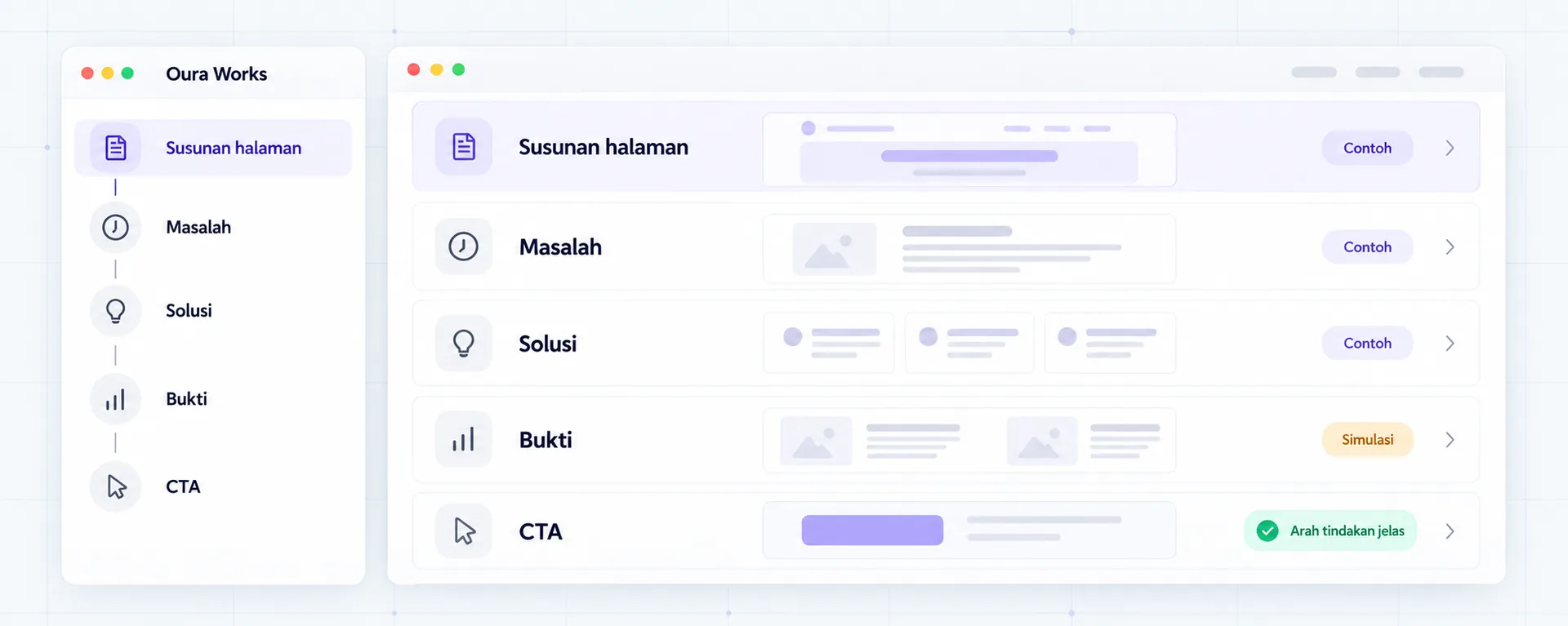
Display a sequence that helps buyers understand the collaboration: understand needs, define scope, prepare materials, conduct review, implement, and check results. Select a stage that is actually in the service. Don't use a generic process diagram for all offers.
Each stage should explain the input, work, and subsequent decisions. In a design review, for example, the input is the initial structure and materials, the job is reviewing the appearance and user path, and the decision is approval or improvement. This information is more useful than stage names without explanation.
Include client contributions in relevant places. Business approvals, product materials, account access, or specification checks can impact work order. Avoid seemingly certain time estimates when the dependencies are not yet known.
5. What evidence can be used?
The evidence must match the claims described. Relevant case studies can show the context of the problem, work, and results in a certain period. Examples of work results can help buyers understand the form of deliverables. Technical references support explanations of methods, not proof of Oura's business results.
Check the source, attribution, publication permission, period, and limits of interpretation. The platform logo used is not proof that the platform is a client or endorser. Certifications and awards are only displayed if actually held and can be verified.
Google's helpful content guidelines emphasize genuine value, useful completeness, clear sources, and headings that are not excessive. On service pages, apply this principle through proper explanations of offers and evidence, not adding words to make it look long.
If no metrics are available yet, explain the work and how it will be evaluated. Don't make sample numbers resemble client results. Label simulations on illustrations used to explain concepts.
6. How to discuss prices and estimates?
Public pricing helps buyers understand the position of the offer if the scope is clear enough. Show units such as per project or per month as well as scope context. For custom jobs, explain the information required before an estimate can be given.
Don't hide decisions-influencing costs through the words “all-inclusive” if third-party, advertising, hosting, licensing, or procurement costs haven't been confirmed. On the other hand, pages also don't need to be long contracts. Summarize important conditions and address details in the proposal.
Oura recommends that each amount be checked along with the name of the offer, scope, inspection date, and renewal owner. As plans change, update service pages, menus, FAQs, and sales materials that reference those numbers. This consistency is a continuous editorial work.
7. How to choose a CTA according to buyer readiness?
The CTA explains the action and expectations afterward. “Discuss integration needs” provides clearer context than “start now” if the next step is indeed consultation. Don't promise free audits, portal access, downloads, or automated schedules if those facilities aren't already available.
| Buyer readiness | Considered CTAs | The goal must be available |
|---|---|---|
| Understand options | View service coverage | Sections or pages with concrete explanations |
| Assess suitability | Study case studies | Cases are relevant to the source and context |
| Prepare requests | Prepare briefs | A readable guide or checklist |
| Ready to discuss | Discuss your needs | Consultation pathway and admission process |
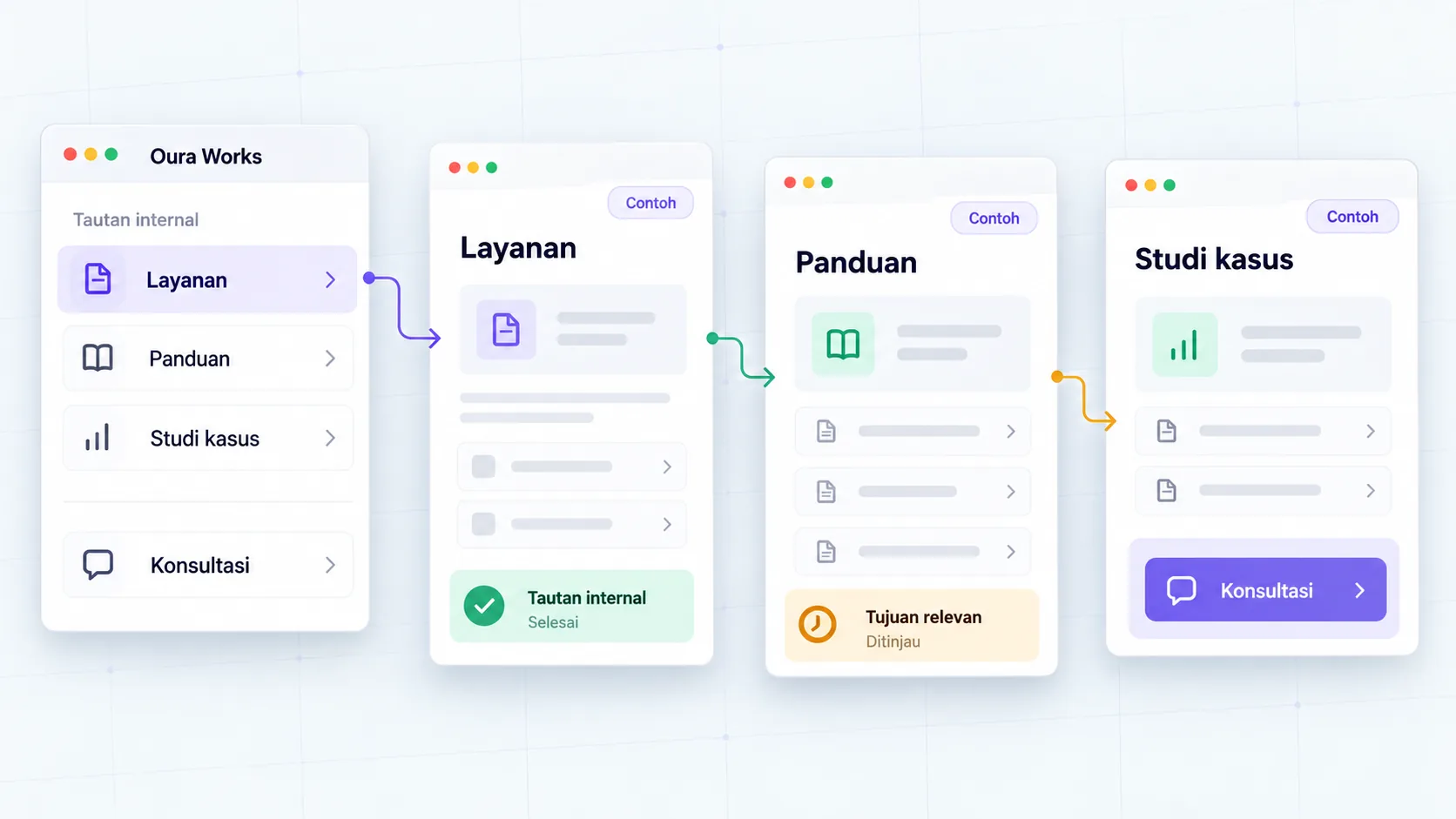
On websites that maintain the layout, change the labels and CTA objectives in the existing slots. Don't add buttons just because all the stages are in the table. Choose the main action and use supporting links when they are helpful to the reader.
8. How to write a useful FAQ?
The FAQ addresses decisions that are not sufficiently explained in the main section. Examples include access needs, client materials, scope differences, or how changes are reviewed. FAQs do not need to repeat headlines with longer sentences.
Use questions that are truly relevant to the service. If buyers frequently ask whether search results are guaranteed, answer clearly that delivery is platform-determined and explain the work involved. Don't turn cost questions into unanswered promotional paragraphs.
Short answers can link to more detailed explanations. Also check accordion interaction: keys can be used via the keyboard, focus is visible, and opened content is not truncated. Correct copying still requires checks within the active component.
9. How to keep copy accurate for SEO?
Write services in terms customers understand. Use titles and descriptions that match the content of the page, links that explain the purpose, and headings that help readers scan. Don't force all the keyword variations into one paragraph or repeat the service name in every sentence.
SEO Starter Guide Google addresses clear titles, structured content, and relevant links and images. There is no magic number of words or steps that automatically rank first. Depth follows the buyer's needs.
If the page describes AI visibility, use appropriate terms and differentiate work from results. Google states that basic SEO remains relevant for AI features in Search and does not require special AI markup. Refer Google AI features documentation when explaining the terms of the platform.
10. How to review copy with the team?
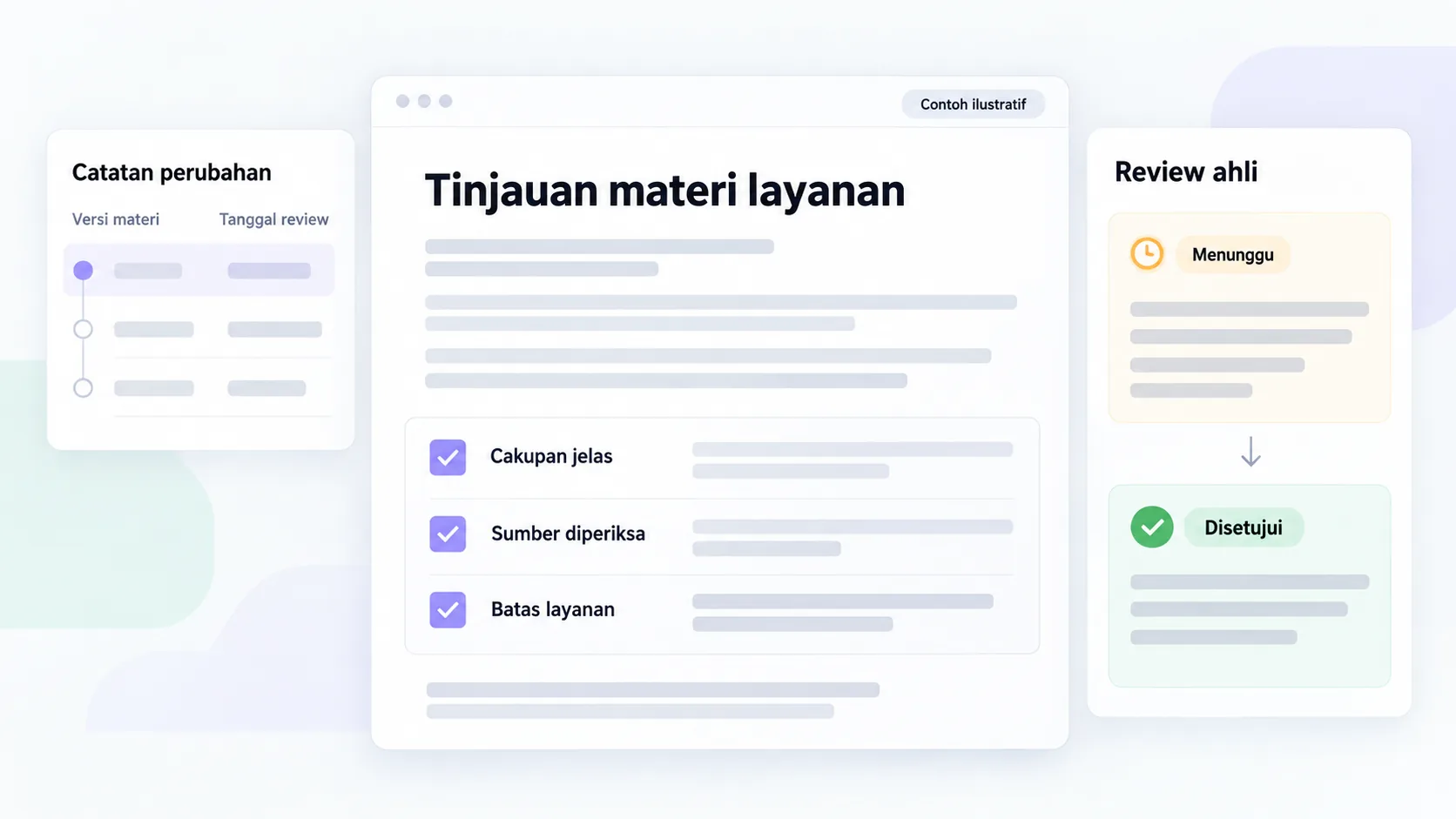
Divide inspections according to responsibilities. The service owner checks the scope and deliverables. The technical team reviews dependencies as well as implementation explanations. Sales checks buyer questions and consultation steps. Brand owners check terms for consistency and proof permissions.
Keep a record of changes along with reasons. If the sentence is shortened because of the frame, make sure the meaning remains correct. Don't delete important borders to make the card look neat. Choose an accurate brief and link to details if there are not enough slots.
Once installed, check desktop, tablet, and mobile. Review headlines, paragraphs, FAQs, buttons, image alt text, and metadata. Also check the text that appears after the interaction, as template labels can remain in the script even if the initial HTML is correct.
11. Example of CRM integration services layout
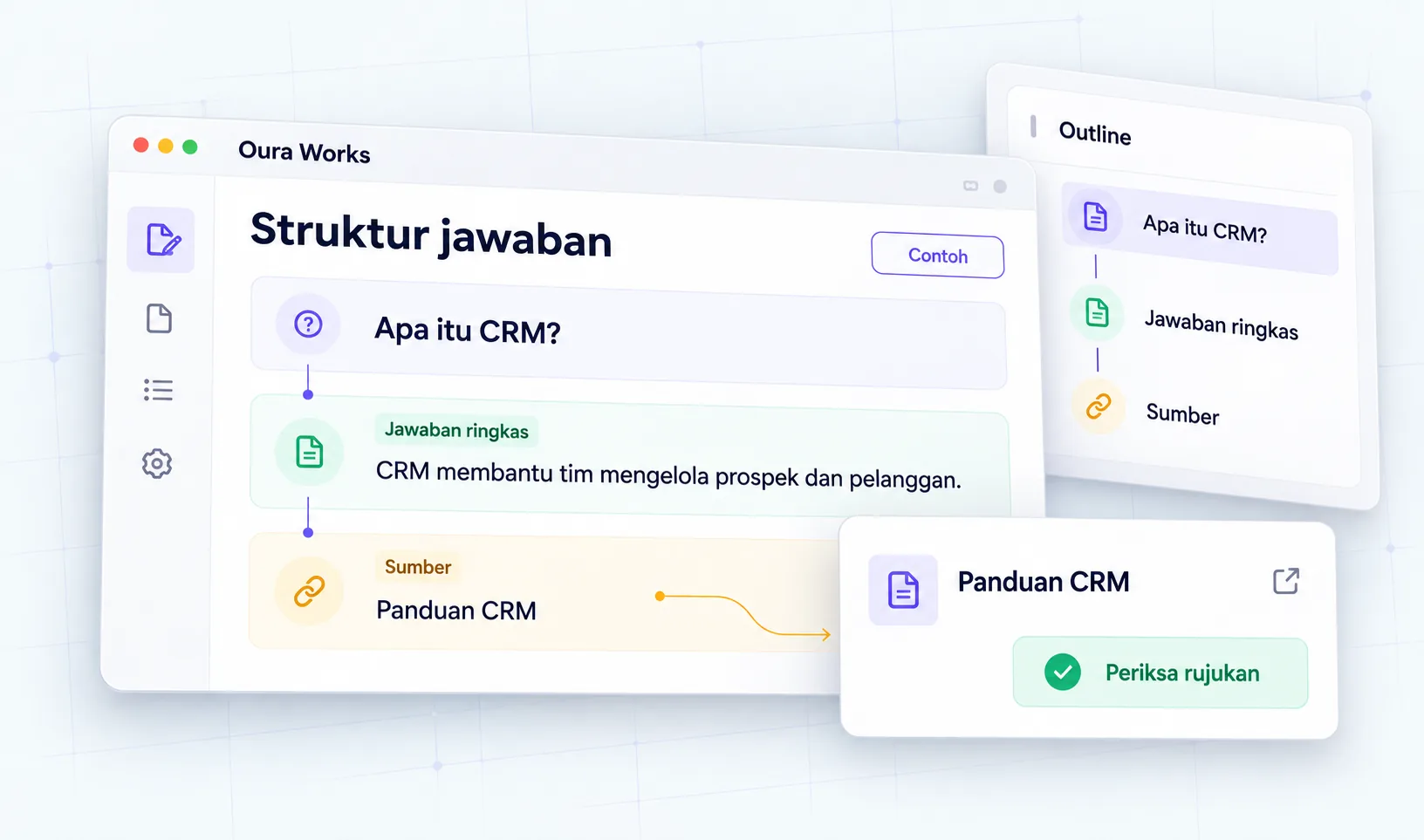
The page offers inspection and implementation of website integration with CRM. The opener explained that the service helps organize the receipt of inquiries and follow-up according to the available system. The match section calls out teams that need a clearer reception flow.Simulation:
Coverage describes field checks, access, API, delivery, and failure conditions. The process shows the brief, flow design, review, implementation, and verification. Evidence uses flow examples labeled simulations or cases that have publication permission.
The CTA leading to the consultation asks the buyer to explain the system and initial needs. The page does not state all automated CRMs can be integrated or promises increased sales. Copy remains attractive because buyers can see the work that helps the problem.
Decision example: process evidence when project results may not yet be published
Service companies may have relevant experience but have not received permission to display client numbers or names. Pages can still explain how things work, what deliverables are included, and review controls without creating a replacement experience.
| Available materials | Fair use | What needs to be avoided |
|---|---|---|
| Correct review procedures | Describe the decision stage and owner | Says all projects use procedures without evidence |
| Synthetic output example | Label the illustration and context boundaries | Packing as client project |
| Unallowed numbers | Save for internal review | Publishing figures with sketchy attribution |
These examples help determine the form of evidence, rather than lowering verification standards. When permissions are available, add the initial condition, period, and source context. Readers should be able to distinguish the methods offered from the engagement results that have been recorded. Review materials when scope of services or procedures change.
Checklist before the page is published
- The opening mentions services and needs that can be helped.
- Job suitability and boundaries are clear.
- The results of work are distinguished from the intended benefits.
- Process according to how the available services work.
- Client contributions as well as important dependencies are mentioned.
- Nominals have units and scope context.
- Evidence, quotes, and logos have proper basis and permission.
- The example illustration does not appear to be a client outcome metric.
- CTA to facilities that are actually available.
- FAQs answer questions, not repeat promotions.
- Copy and metadata are checked in the active frame.
- The owner of the content update has been determined.
Conclusion: make the offer easy to understand
Useful service pages help buyers understand fit, work, process, and next steps. Interest grows from clear explanations and precise evidence. Don't rely on slogans or numbers that can't be verified.
Discuss the message and content of your service page with Oura. Prepare a list of offers, sales questions, and materials that may be used. Review of initial conditions helps determine required copy work, structure, and implementation.
FAQs
What is the ideal service page length?
Length follows the information the buyer needs and the complexity of the offer. Don't add content to catch up with the word count. Check that important questions are answered and readers can find next steps.
Are prices required to be displayed?
Not always. If the scope is clear, reference prices by unit can help buyers. If the job requires inspection, explain the materials for the estimate and how to request a quote. Do not make nominal amounts that have not been approved.
Explain the goals and the work that supports them. Show the form of deliverables or how to evaluate. Avoid stating percentage increases without data that has context and sources.
Is it OK to use anonymous examples?
Yes, if sources, permissions and identification risks are checked. If the example is created to explain a concept, label it as a simulation. Don't write quotes or fictional client experiences.
Does the FAQ have to repeat the content of the page?
No. Use the FAQ for follow-up decisions or explanations that aren't clear enough. Answers can be short and link to related sections to avoid repeating the page.
Who approves the copy before it goes live?
Determine the owner according to the information: service, technical, sales, brand, and evidence. One person can coordinate the review, but specific claims need to be vetted by someone familiar with the source.
Resources
- Google Search Central — Creating helpful, reliable, people-first content.
- Google Search Central — SEO Starter Guide.
- Google Search Central — AI features and your website.
Continue on to guides and stories that discuss similar decisions.
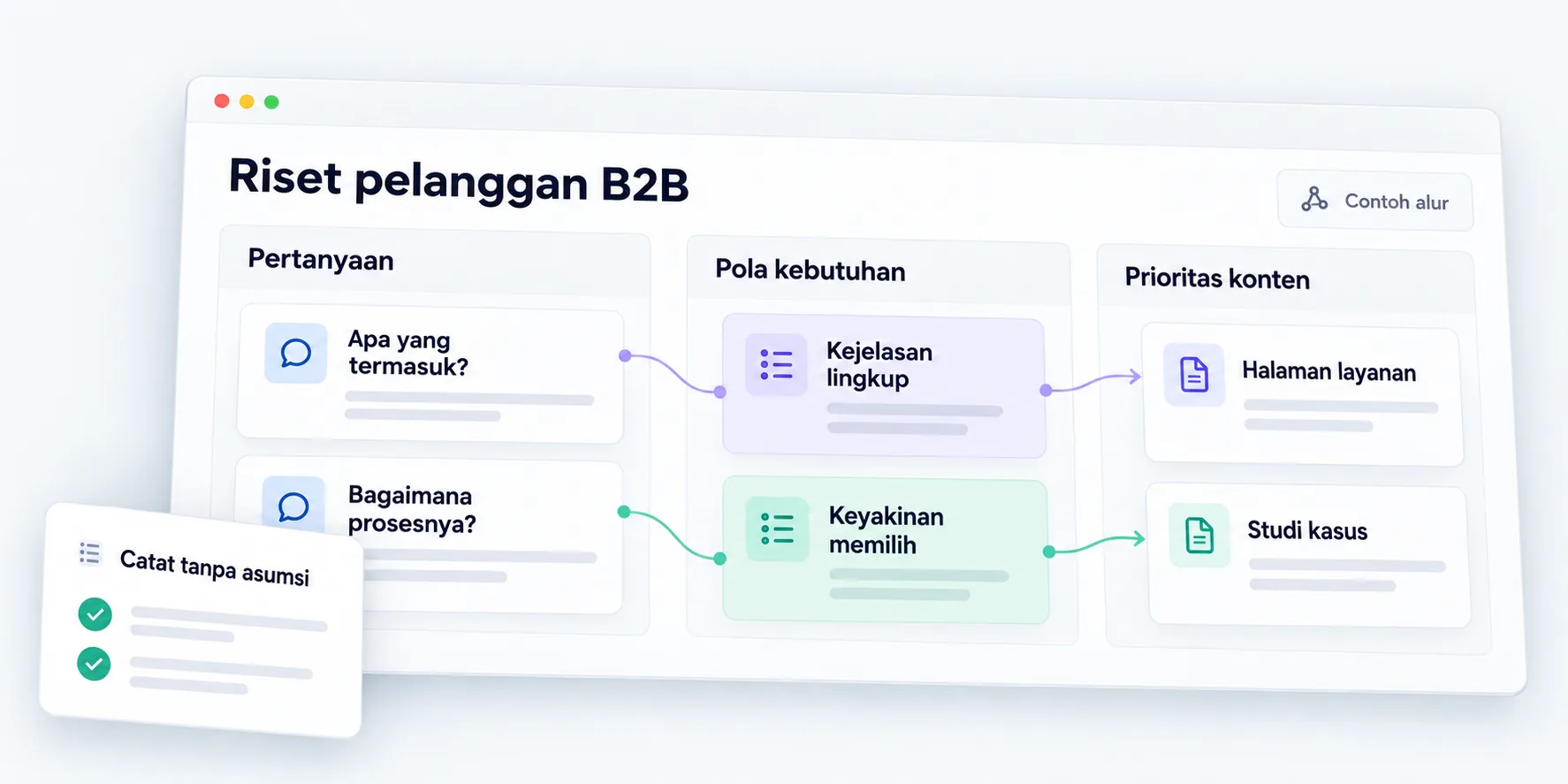
B2B customer research for websites
Map out needs, objections, and the buying process.
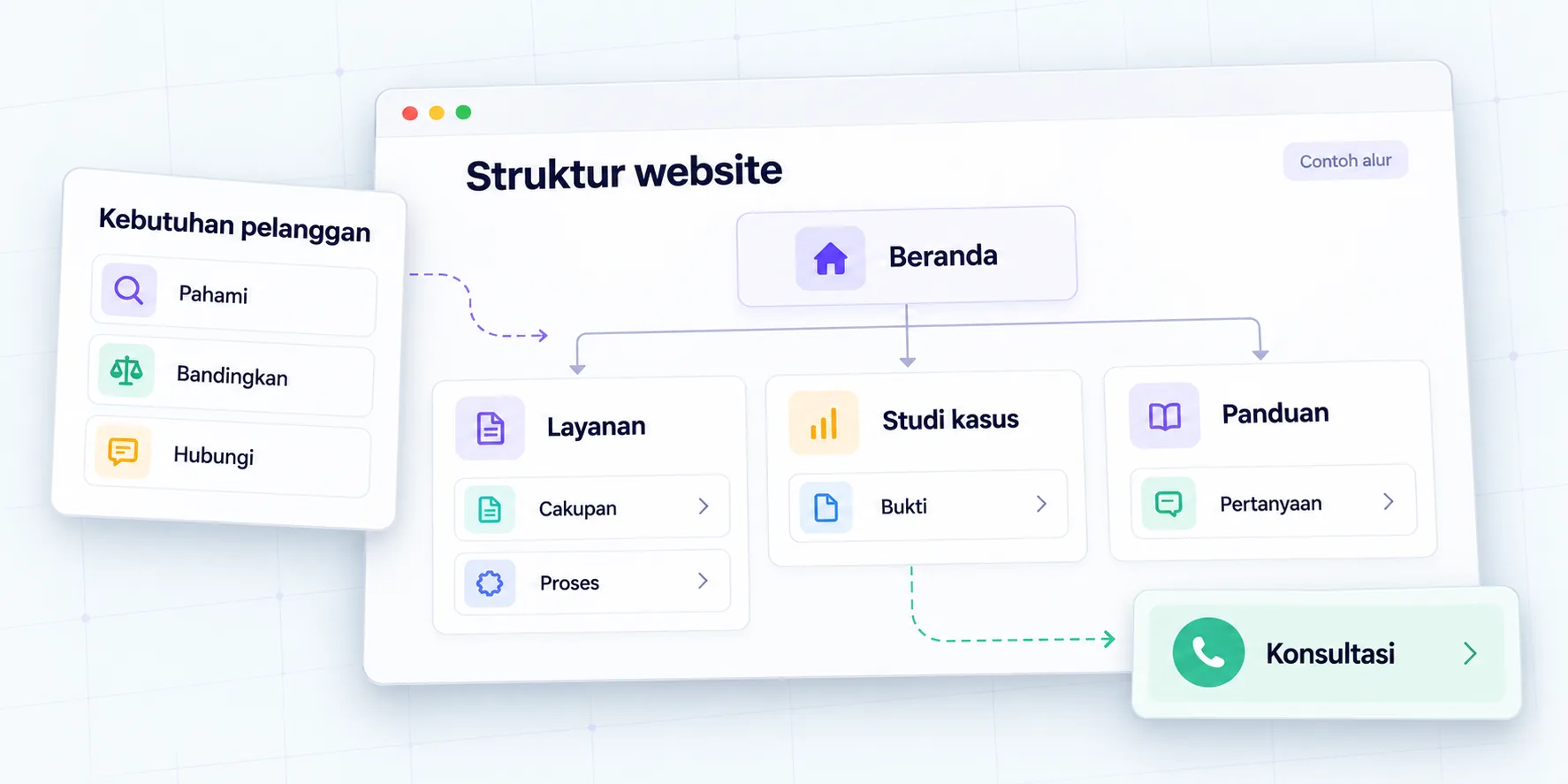
Website structure based on buyer needs
Determine the role of the page before drafting the design.
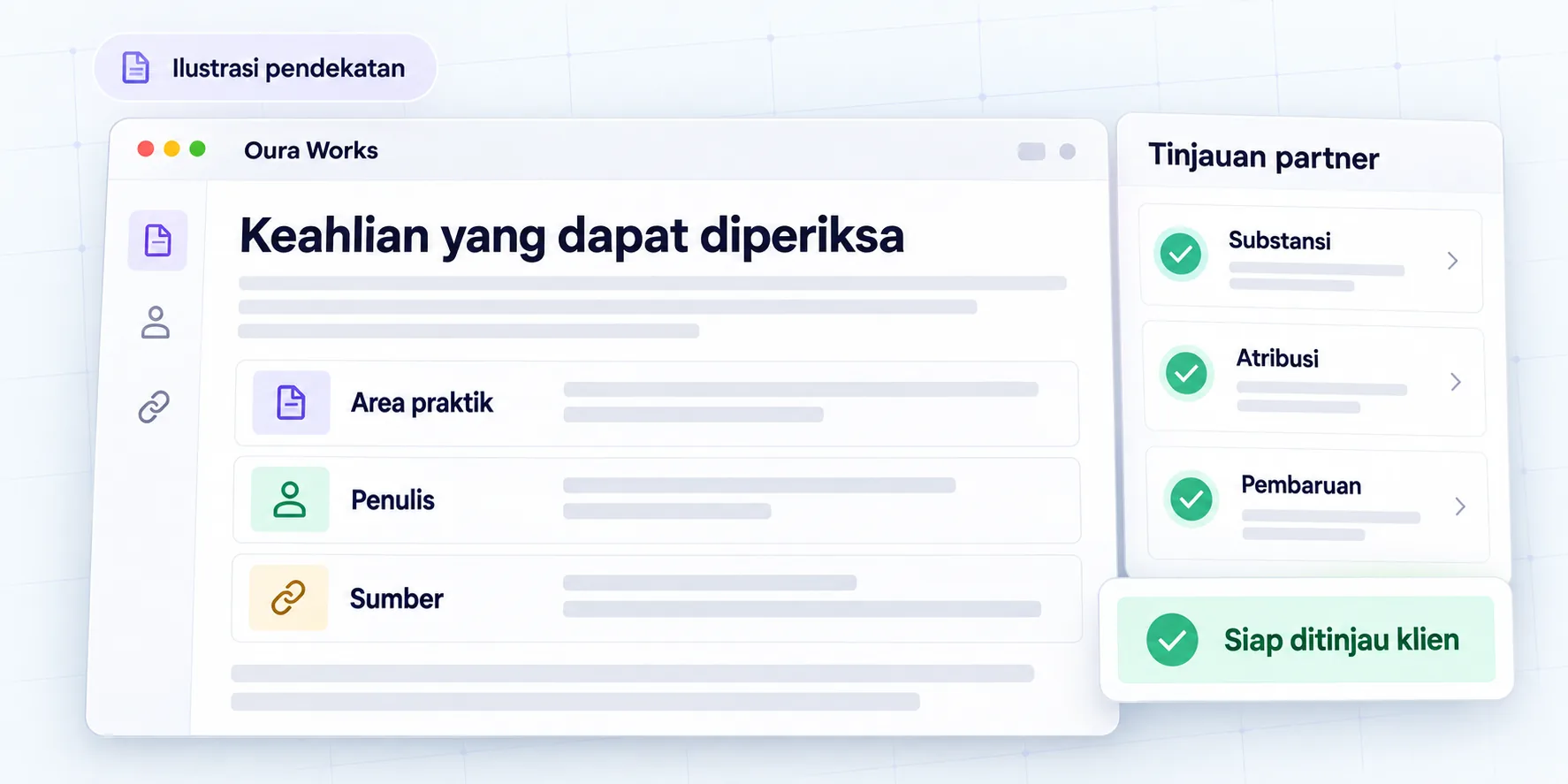
Expert-reviewed legal content
Partner expertise and reviews supported nine months of work.
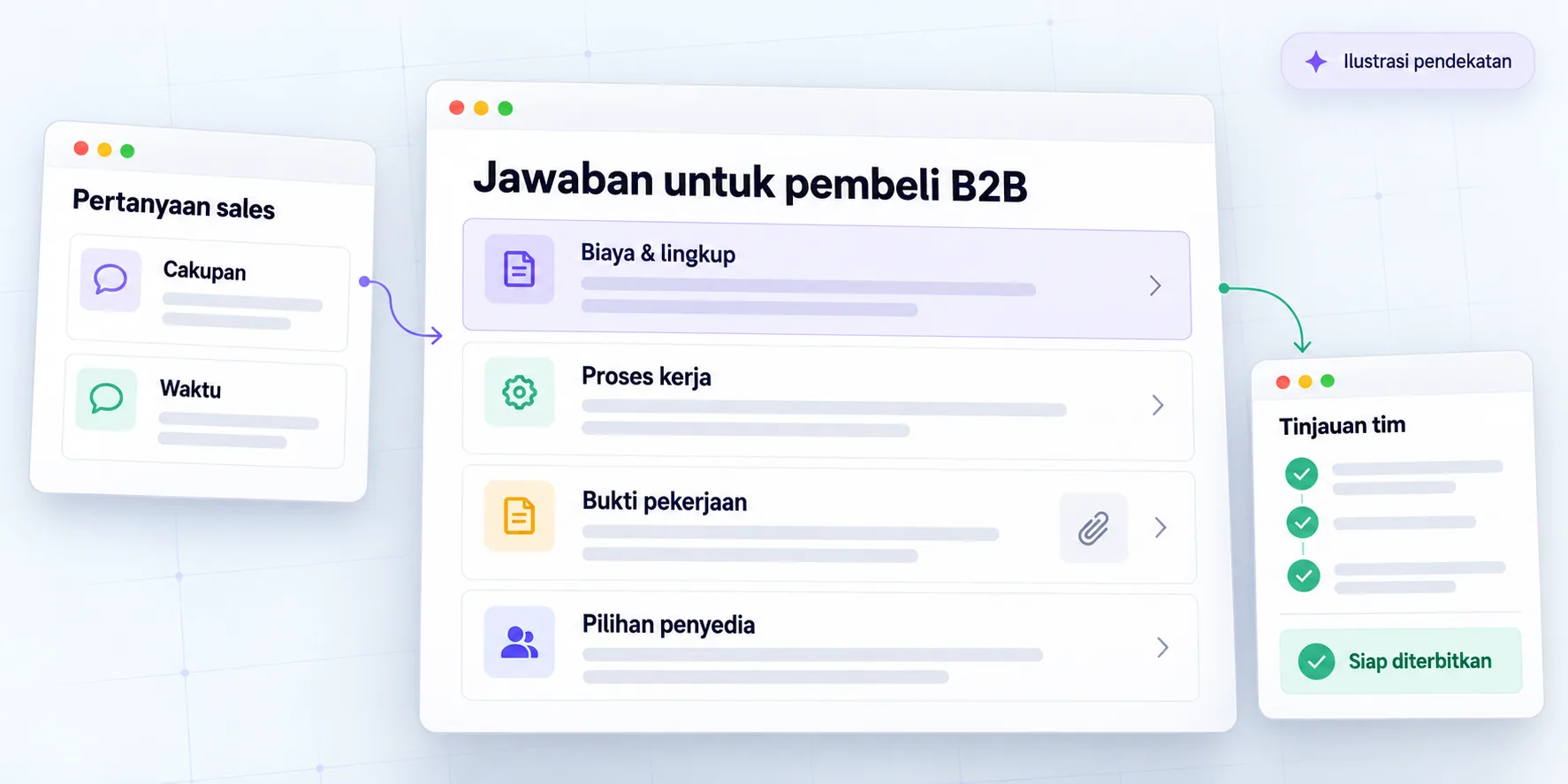
More useful service content
Buyer questions formed the basis of eight months of content work.
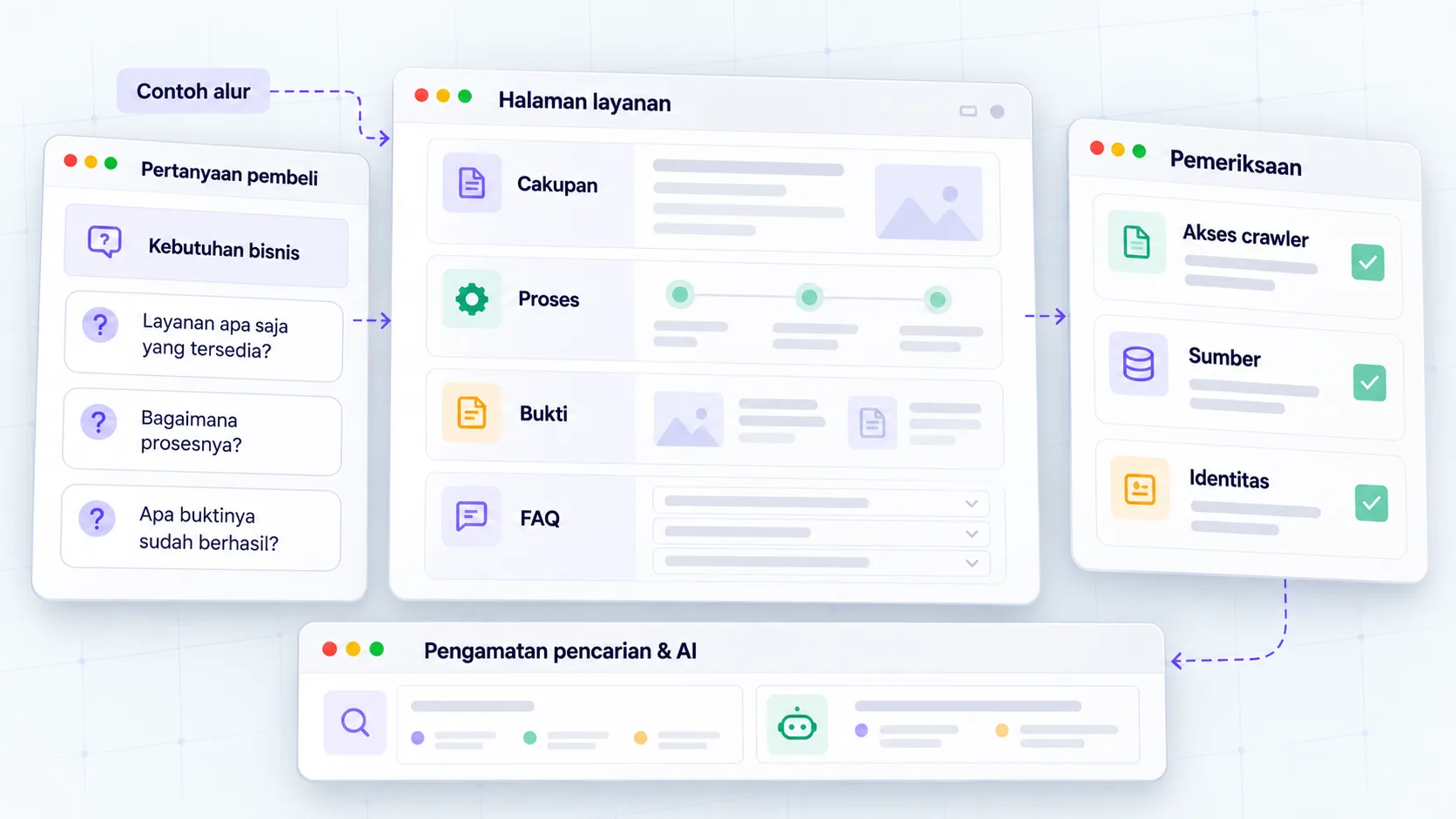
SEO foundation for AI search
Maintain technical access and information that helps readers.
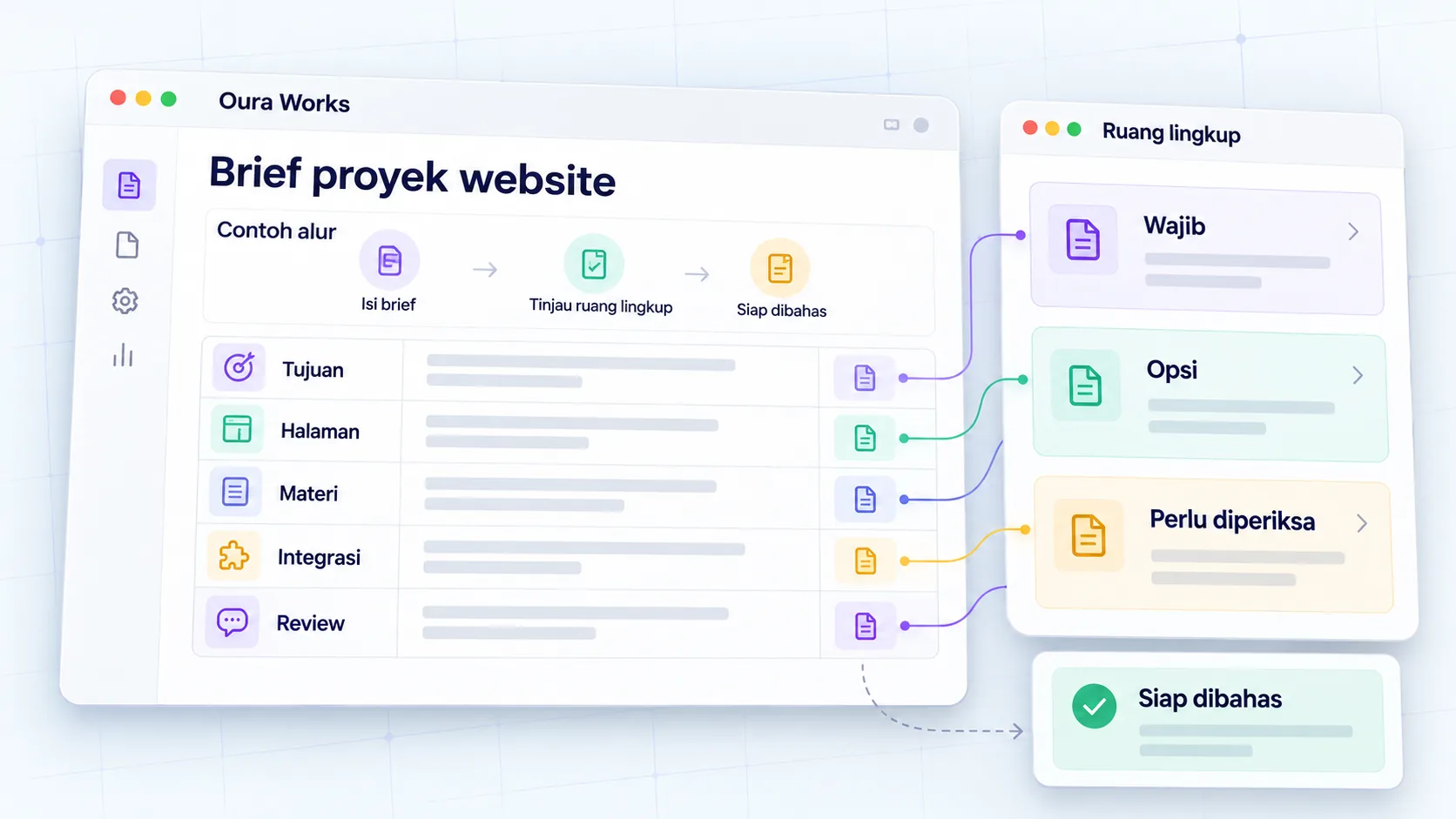
Clear website project brief
Agree on project goals, scope, and decisions.