

















This is a methodology guide for measuring AI search in an Indonesian business context. It is not a national survey, market-adoption report, or publication of an Oura engagement dataset. Numbers below are arithmetic examples only; establish a clear method before interpreting visibility changes.
Updated 5 October 2026. Examples and simulations are distinguished from measured client results.
Three research questions, not national trend claims
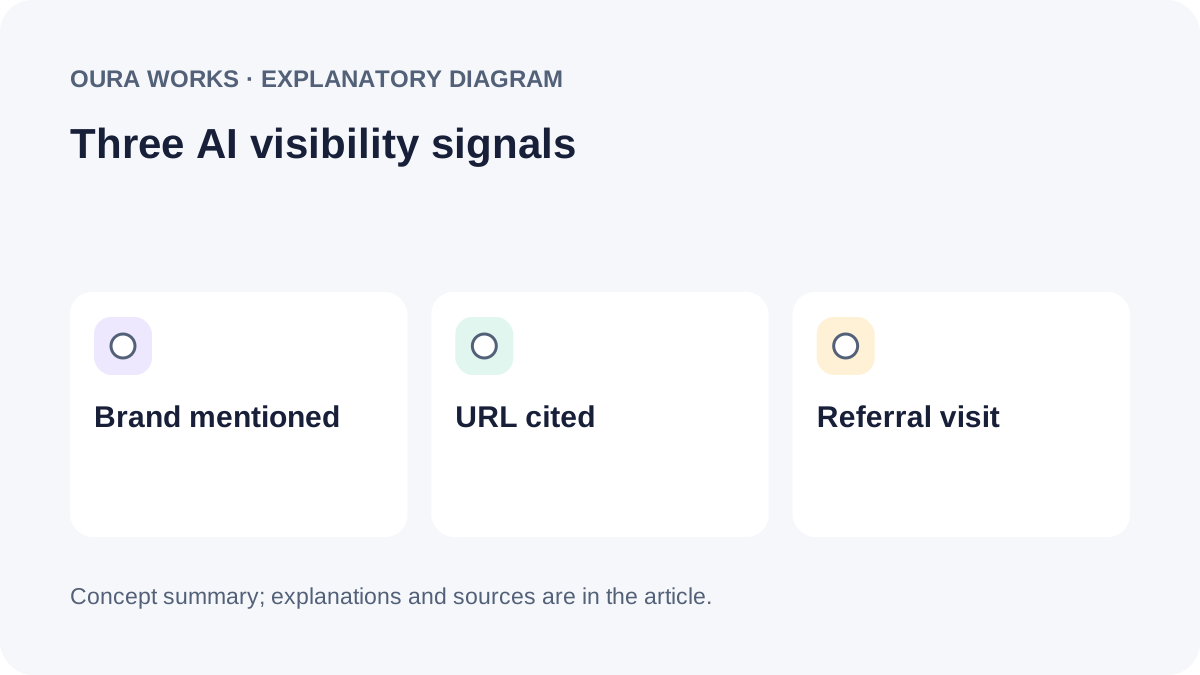
First, do buyers use AI to understand or compare services? Second, does business information appear accurately in tested responses? Third, do identifiable visits produce relevant inquiries? Answer the first through customer research, the second through response logs, and the third through business measurement. Do not infer all Indonesian behavior from one client or product.
Related reading: Buyer research; Priorities based on obstacles.
An auditable measurement framework
| Layer | Retained data | Limitation |
|---|---|---|
| Questions | Question sources and intent | Not automatically a population sample |
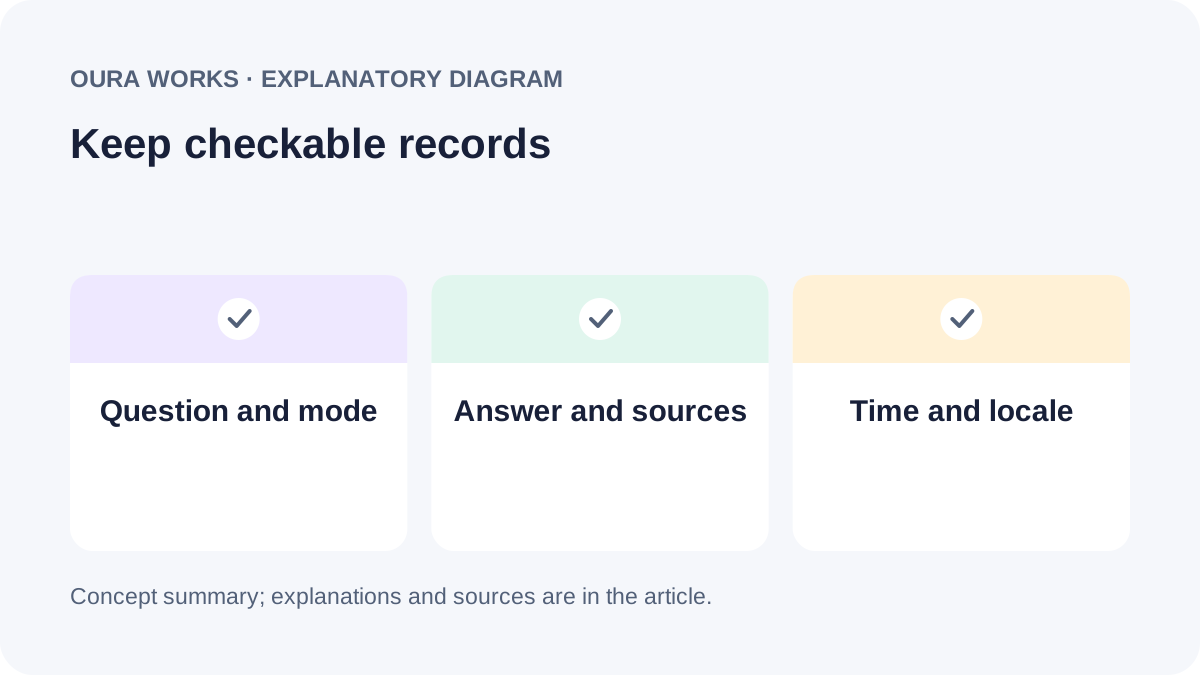
| Responses | Product, mode, language, time, sources | Answers can change |
| Visits | Source/medium/channel and landing page | Limited referrers and consent |
| Inquiries | Valid receipt and qualification rules | Not automatically sales |
Assign owners and definitions before testing. Retain versioned datasets, full responses, source URLs, and change records. Unavailable information should remain labeled unmeasured rather than zero.
GA4: channels and identifiable referrals
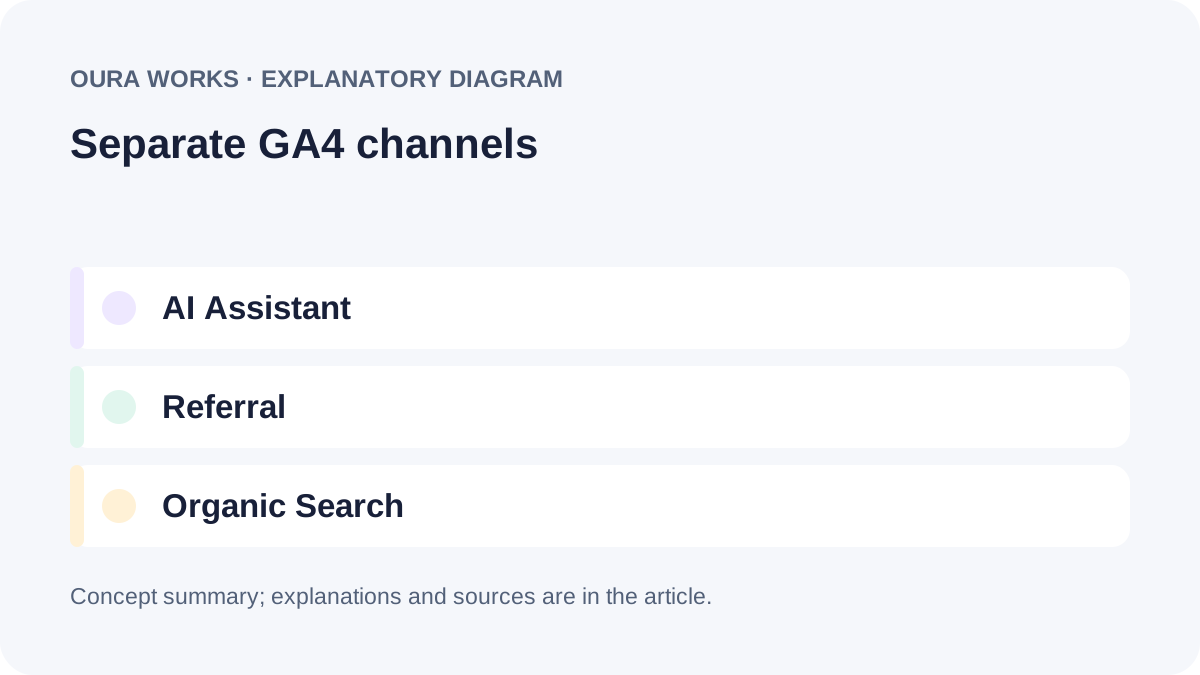
Under GA4 channel rules, AI Assistant uses the ai-assistant medium for recognized referrers. Other referrals may fall under Referral according to the rules; Google AI Overviews and AI Mode are included in Organic Search. Segmentation helps analysis but does not change automatic classification. Lost referrers, consent, apps, and blocking limit the data.
Rule example, not measured Oura traffic: a recognized referrer may yield chatgpt.com as source and ai-assistant as medium. Check actual values in your property. Do not call all unsegmented visits organic or attribute all Direct traffic to AI.
Mention rate and citation rate with clear denominators
| Measure | Numerator | Denominator |
|---|---|---|
| Brand mention rate | Responses naming the brand under the definition | All valid tested responses |
| URL citation rate | Responses linking the defined domain URLs | All valid tested responses |
| Inquiry rate | Valid inquiries from eligible sessions | Eligible sessions |
Arithmetic example: 20 questions × 3 engines × 2 repetitions gives 120 planned responses, not 20 observations. If all are valid, 30 mentions means 25% and 12 URL citations means 10%. Also report by engine so aggregates do not hide differences. Responses without appearances remain in the denominator. Report technical failures separately under predefined retry rules rather than silently deleting them.
Using findings for content decisions
Inspect questions and sources before choosing changes. Inaccurate information needs correction; incomplete content needs a requirements review; absence needs access checks or an explicitly unproven source-selection hypothesis. Vendor research is not automatically an Indonesian benchmark. Ahrefs’ July 2025 analysis of 15,000 prompts on citation overlap with Google’s top ten for original prompts is a different sample, not a result of this method. Ahrefs study scope.
Related reading: Reviewing service information; Connecting data with inquiries.
Next step: run an honest pilot
Start with manageable questions, written test rules, and a review owner. Define dates, products, modes, languages, context, sessions, and repetition methods. Save a baseline before editing pages and compare comparable periods. Read available GSC generative Search impression reports separately. Publish results with samples, methods, limitations, and permissions; until data is available, this article remains a methodology guide. Google report definitions.
Primary references
Frequently asked questions
What does AI search measurement mean?
Observing responses, sources, identifiable visits, and business outcomes under a disclosed method. Each layer has different evidence limits.
Is this an Oura survey about Indonesia?
No. This is a methods guide without a national survey dataset or new engagement outcomes. Example numbers are arithmetic simulations.
Which metrics are useful?
Choose according to the decision: mentions and citations for responses, channels and source/medium for visits, valid inquiries for receipt. Do not combine them into an undefined score.
When should I start measuring?
Before the change you want to evaluate, once questions, methods, access, and owners are clear. Unavailable data should be reported as unmeasured.